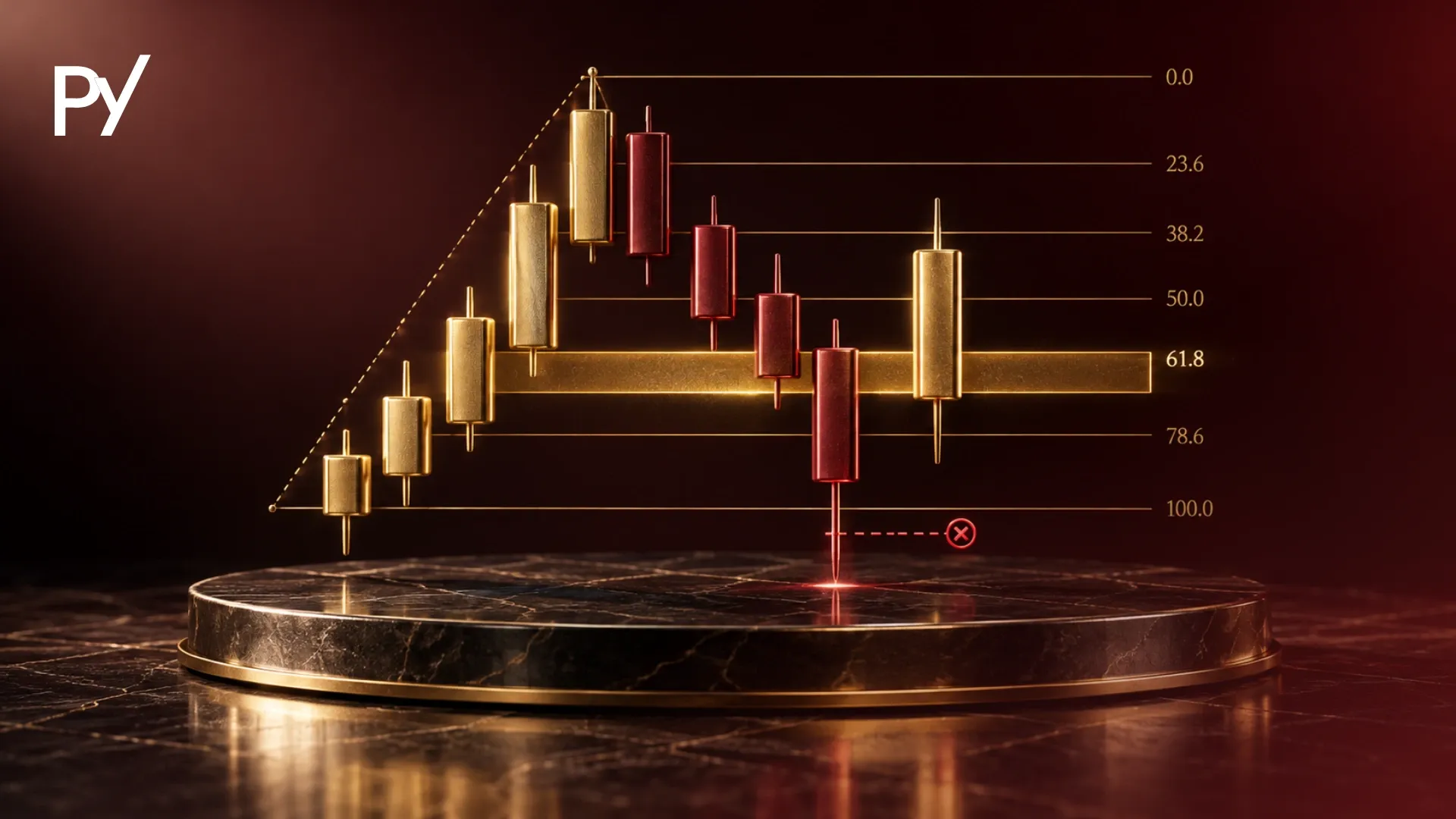
Gamma scalping is an options strategy where a trader buys long options positions and dynamically trades the underlying asset to adjust portfolio delta back to zero. This market-neutral approach captures profits from underlying price movements to offset daily options time decay (Θ). The strategy succeeds when realized volatility (RV) exceeds the implied volatility (IV) priced into the options premium.
Gamma Scalping Explained: Mechanics, Math, and Funded Trading Traps
Gamma scalping is a dynamic options trading strategy where a trader holds a long gamma position—typically via long calls or puts—and continuously buys or sells the underlying asset to keep the overall portfolio delta-neutral while extracting profits from price swings.
While standard options strategies leave you exposed to rapid directional shifts, gamma scalping converts market volatility into localized realized gains. However, balancing frequent underlying adjustments against daily options time decay requires strict mathematical rigor. This guide covers how gamma scalping works step-by-step, how options Greeks interact during high volatility, and why execution costs can erode account capital in high-frequency hedging environments.
What Is Gamma Scalping?
Gamma scalping is an advanced way to profit from price swings by keeping your options position delta-neutral — meaning it has no net directional bet on the market. Rather than directional speculation on whether an asset will move up or down, gamma scalping focuses entirely on the rate and magnitude of asset price movement relative to option pricing parameters.
To run a gamma scalp, you must establish a long gamma foundation. This requires purchasing options contracts—such as an at-the-money (ATM) straddle or strangle—giving you positive exposure to price movement in either direction. Short options positions carry negative gamma, which creates compounding losses as prices move away from strike prices, making short positions unsuitable for this strategy.
Understanding the underlying execution requires tracking how the four primary options Greeks interact dynamically:
Delta (Δ): Measures the expected change in an option's price per $1.00 move in the underlying asset. A portfolio with a net delta of zero has no immediate directional exposure.
Gamma (Γ): Measures the rate of change in delta relative to underlying price movement. Positive gamma means your portfolio delta naturally increases as the underlying asset moves up and decreases as it moves down.
Theta (Θ): Represents daily time decay—the continuous capital loss incurred from holding long option contracts. Theta acts as the ongoing cost required to maintain gamma exposure.
Vega (V): Measures sensitivity to shifts in market implied volatility (IV). Increasing implied volatility raises the theoretical value of long option contracts.
Online trading forums often market dynamic delta hedging as a "risk-free" yield framework. In reality, gamma scalping is a systematic trade-off: you pay fixed daily theta costs in exchange for the right to capture variable profit from underlying market swings.
How Gamma Scalping Works: Step-by-Step Mechanics
Executing a gamma scalp requires establishing a net-zero portfolio delta through options and underlying positions, then systematically trading against price movements as market price drifts away from equilibrium.
Step 1: Establishing Delta-Neutrality
To build the foundation, you purchase an ATM straddle consisting of one long call option and one long put option at the same strike price and expiration date.
Assuming the call option carries a delta of +0.50 and the put option carries a delta of -0.50, the combined position has a net delta of 0.00 (+0.50 + -0.50 = 0.00). At this exact moment, the option position is perfectly market-neutral.
Step 2: Experiencing Delta Drift
As the underlying asset price shifts, positive gamma alters your options' deltas.
If the underlying asset rises by $5.00, the call option moves deeper into the money, increasing its delta from +0.50 to +0.65. Simultaneously, the put option moves further out of the money, shifting its delta from -0.50 to -0.35.
Net Delta = (+0.65) + (-0.35) = +0.30
Your portfolio now holds a net positive delta of +0.30 per option contract set. You are now directionally long the underlying market.
Step 3: Harvesting the Scalp
To return the portfolio to a net delta of zero, you sell underlying asset units (such as stock shares or futures contracts) equal to +0.30 delta at the elevated price.
This sale locks in a profit on the directional drift while resetting total portfolio delta to zero. If the asset subsequently drops back to its original price level, positive gamma pushes your net option delta negative (e.g., -0.30), prompting you to buy back the underlying asset units at a lower price.
Through this continuous cycle, you consistently sell high during market rallies and buy low during market pullbacks.
Gamma Scalping vs. Standard Delta Hedging
While standard delta hedging is a defensive procedure designed to eliminate market directional risk, gamma scalping is an offensive strategy designed to actively monetize market volatility.
Standard institutional delta hedgers rebalance positions periodically to remove directional exposure from existing options inventories. Conversely, gamma scalpers deliberately enter long option positions to harvest asset rebalancing profits, using net-zero delta strictly as an operational baseline.
Volatility and Transaction Friction: The Profitability Drivers
The ultimate profitability of gamma scalping depends entirely on whether realized volatility (RV) exceeds the implied volatility (IV) priced into your options contracts, after subtracting execution costs.
When you purchase an option contract, the premium you pay reflects the market's expectation of future volatility (IV). This premium determines your daily theta decay (Θ). If actual price movement (RV) matches or falls short of implied volatility, the total profit generated from underlying scalps will fail to cover the daily theta cost, leading to account capital losses.
The Rehedging Frequency Dilemma
Determining when to rebalance delta presents a persistent operational trade-off:
Rehedging Too Frequently: Adjusting hedge sizes on minor price fluctuations captures tiny scalping profits, but high order frequency generates substantial commission costs and bid-ask spread friction.
Rehedging Too Infrequently: Waiting for large price swings reduces transaction fees, but leaves the portfolio exposed to directional market risk between adjustments.
To optimize rebalancing thresholds, institutional operators rarely hedge on arbitrary price ticks. Instead, they combine volatility measures—such as Average True Range (ATR)—alongside the best indicators for scalping to trigger hedge orders only when asset moves cross statistically significant variance levels.
Common Traps and Execution Risks
Unmanaged transaction costs, low realized volatility, and market gap risk represent the most frequent causes of failure when running a gamma scalping operational model.
Trap 1: Quiet Capital Erosion via Theta Bleed
Holding long options positions during extended periods of market consolidation creates persistent capital loss. When underlying asset prices remain bound within tight ranges, positive gamma yields insufficient delta drift to generate rebalancing opportunities. Meanwhile, daily theta decay continues to drain account balance without offsetting revenues.
Trap 2: Execution Friction & Commission Stacking
Dynamic delta hedging requires executing dozens of underlying buys and sells throughout the trading day. Exchange commissions, platform routing fees, and bid-ask spread losses stack up rapidly. In tight markets, transaction costs can easily consume the entirety of gross scalping profits.
Trap 3: Gap Risk & Market Discontinuity
Gamma scalping relies on continuous asset price movement. If a sudden news event or overnight market gap causes an asset price to jump significantly without trading continuously through intermediate prices, your option delta will change instantaneously. By the time your rebalancing limit or market order fills, the asset may have moved past optimal hedge pricing, causing severe slippage losses.
Many capital allocation programs enforce strict trailing daily drawdown rules. Because long option values fluctuate alongside open equity swings, theta decay combined with real-time spread friction can push account balances below trailing limit thresholds, even if individual scalping trades yield small gains.
Many options traders fail at gamma scalping because they focus exclusively on mathematical delta triggers while ignoring commission schedules. Executing twenty underlying hedges in a single session can consume up to 40% of your gross gamma profit in fees alone, effectively turning a statistically winning trade into a net loss.
The Bottom Line on Gamma Scalping
Gamma scalping provides an institutional-grade framework for extracting profit from market movement without taking a static directional stance. Succeeding with dynamic delta hedging requires balancing long gamma profits against daily theta decay, bid-ask spreads, and fee structures. Before deploying dynamic options hedging models, mastering foundational price movement and short-term execution via scalping remains essential for managing underlying friction.
FAQ
Is gamma scalping a risk-free trading strategy?
No, gamma scalping is not risk-free. Although maintaining a delta-neutral position eliminates immediate directional risk, the strategy exposes traders to continuous options time decay (Θ) and transaction friction. If the underlying asset stays in a tight range or experiences major gap slippage, theta decay and execution fees can create substantial trading losses.
Which options structure is best for setting up a gamma scalp?
The most common setup is a long at-the-money (ATM) straddle or strangle, combining a long call option and a long put option at identical or near-identical strike prices and expiration dates. This position establishes maximum positive gamma, giving the trader maximum delta sensitivity to price movements in either direction.
What happens if realized volatility is lower than implied volatility?
If realized volatility remains lower than the implied volatility (IV) implied by option premiums, the gamma scalp will lose money. The continuous daily time decay (Θ) paid to hold the options will exceed the cumulative scalping gains realized from rebalancing underlying hedges, resulting in a net account drawdown.
How do traders calculate how often to rehedge delta?
Traders determine rehedging frequency using fixed delta thresholds, time intervals, or volatility bands like Average True Range (ATR). Rehedging too frequently creates commission and spread friction that erodes profits, while waiting too long exposes the portfolio to unhedged directional market risk.
Can you trade gamma scalping strategies in a funded prop trading account?
Executing gamma scalping in funded accounts is difficult because many prop firms restrict options trading or enforce strict trailing drawdown limits. Furthermore, high transaction fees and spread costs from frequent rehedging can trigger daily loss limits, even if individual underlying trades generate minor gross gains.
Disclaimer
Disclaimer: This guide was written with AI assistance, reviewed for accuracy by the Proptary editorial team, and kept up to date. It's for education only — not financial advice. Prop trading and the financial markets carry a significant risk of loss, so consider your own situation and consult a licensed advisor before you trade.
Proptary editorial team independently reviews prop trading firms, verifies payouts, and explains the rules that decide who keeps an account. We disclose affiliate relationships and publish methodology for every score.