
The Gravestone Doji candlestick pattern is a bearish reversal signal marked by a long upper shadow and virtually identical open, close, and low prices. It occurs when aggressive buyers push prices upward during the session, only for sellers to step in and drive the price back down to the opening level by the close.

On this pageWhat Is a Gravestone Doji?
Direct Answer
A Gravestone Doji is a bearish reversal candlestick pattern characterized by a long upper shadow and virtually identical open, close, and low prices. It forms when buyers drive prices higher during the session, but sellers force the price back down to the opening level by the close, signaling exhaustion and potential reversal at resistance.
What Is a Gravestone Doji?
The Gravestone Doji is a technical price action pattern named for its visual resemblance to a tombstone. Structurally, it reflects a session where buyers held complete control early on, pushing the asset to a new session high, but ultimately lost all momentum before the market closed.

In plain technical terms, the pattern tells you that the market attempted an upward breakout, encountered overwhelming supply, and forced buyers into surrender. When this geometry forms at key market turning points, it serves as an early indicator that a prevailing uptrend is losing momentum.
Anatomy and Technical Requirements
To distinguish a true Gravestone Doji from generic market noise, the candlestick must meet strict geometrical criteria:
- Long Upper Shadow: The upper wick should be significantly longer than the average candle body size on the chart, representing a clear rejection of higher prices.
- Minimal to No Lower Shadow: The low of the candle must sit directly on, or extremely close to, the open and close price.
- Identical Open and Close: The real body of the candle is functionally non-existent. While exact open-close parity is ideal, small body variance is acceptable if the wick dominates the structure.
- Prior Uptrend Context: A Gravestone Doji that appears in a sideways range carries little predictive value. It must form after an extended upward move or against a major higher-timeframe resistance zone.
Market Psychology Behind the Rejection
Understanding the underlying order flow helps traders avoid knee-jerk entries. The formation of a Gravestone Doji unfolds in three distinct psychological phases:
- The Buying Surge: Aggressive market orders or stop-loss runs push the price rapidly upward, breaking past intraday highs. Retail traders often jump in due to fear of missing out (FOMO).
- Institutional Supply Activation: As price hits a significant liquidity pool or key resistance, institutional sellers execute large sell orders, soaking up all remaining buy volume.
- The Collapse: Lacking additional buying power, the market plummets back down to its starting level. Late-entering buyers are left trapped at the top in losing positions, accelerating downward momentum as they cut losses.
Gravestone Doji vs. Dragonfly Doji
The Gravestone Doji is the exact opposite of the dragonfly doji candlestick pattern. While both represent severe price rejection and market indecision, their structural mechanics and implications differ completely.
| Feature | Gravestone Doji | Dragonfly Doji |
|---|---|---|
| Shadow Direction | Long upper shadow | Long lower shadow |
| Open / Close / Low | At the bottom of the range | At the top of the range |
| Market Implication | Bearish reversal (buying exhaustion) | Bullish reversal (selling exhaustion) |
| Ideal Location | Peak of an uptrend or strong resistance | Trough of a downtrend or key support |
Unlike the bullish reversal nature of patterns like the morning star candlestick pattern, the Gravestone Doji strictly focuses on upper-level supply absorption.
How to Trade the Gravestone Doji in a Funded Account
Trading technical patterns inside a prop firm challenge or funded account requires a strict framework. Relying solely on single-candle signals without structural context is one of the fastest ways to breach trailing drawdown limits.
1. Wait for Multi-Candle Confirmation
Never open a position immediately as the Gravestone Doji closes. A single wick can easily be a momentary liquidity grab before price resumes its upward trend. Wait for a subsequent bearish candle to close below the low of the Doji to confirm that short sellers are in complete control.
2. Locate Confluence Zones
A Gravestone Doji in isolation has a low statistical probability. Ensure the upper wick rejects a major structural element, such as:
- Higher-timeframe horizontal supply zones
- Key Fibonacci retracement levels (e.g., 61.8%)
- Dynamic moving average resistance
3. Risk Management and Stop Placement
Place your stop loss slightly above the high of the Gravestone Doji's upper shadow. Because long wicks can create wider stop-loss distances, you must recalculate your position size so that total exposure does not exceed 0.5% to 1% of your total account balance. This protects your account from sudden spread spikes during volatility windows.
Many traders place their stop loss directly on the exact high of the rejection wick. Institutional sweepers frequently test these extreme highs a second time to clear remaining stop liquidity before the true downward expansion happens. Adding a small buffer above the high protects your position from premature stop-outs.
Common Traps and Execution Pitfalls
- Treating the Pattern as an Immediate Short Signal: Shorting the second the candle closes leaves you vulnerable to continuation breakouts. Always wait for structural confirmation.
- Ignoring the Prevailing Trend: Attempting to short a strong, news-driven parabolic bull trend with just one Gravestone Doji often leads to blown accounts. Trend context always overrules single-bar geometry.
- Forgetting Drawdown Mechanics: When trading with prop firm capital, dynamic trailing drawdowns lock on peak equity. Entering a short without calculated sizing can trigger a max daily loss violation if the market spikes higher before reversing.
Recognizing Market Context
The Gravestone Doji candlestick pattern is a powerful indicator of buyer exhaustion and institutional distribution, but its value relies entirely on market context and confirmation. By combining this candlestick formation with structural resistance and disciplined risk management, you can build a more consistent, higher-confluence approach to reversal trading.
FAQ
What does a Gravestone Doji tell you?
A Gravestone Doji indicates that buyers successfully pushed prices upward during the session, but encountered heavy supply that forced the price back down to its opening level. It signals buying exhaustion and potential bearish reversal near resistance zones.
Is a Gravestone Doji bullish or bearish?
The Gravestone Doji is primarily a bearish reversal pattern when it forms after an uptrend or at a key resistance level. It shows that aggressive buying momentum was entirely rejected by institutional sellers before the session closed.
How do you confirm a Gravestone Doji before entering a trade?
You confirm a Gravestone Doji by waiting for the subsequent candlestick to close below the Doji's low. Trading confirmation helps ensure sellers remain in control and prevents entering on false liquidity grabs.
Where should you place a stop loss on a Gravestone Doji trade?
A stop loss should be placed slightly above the peak of the Gravestone Doji's upper shadow. Adding a small buffer above the wick accounts for spread widening and secondary liquidity sweeps.
What is the difference between a Gravestone Doji and a Shooting Star?
Both candles feature long upper wicks and signal bearish rejection at market highs. However, a Gravestone Doji has no real body (open equals close), whereas a Shooting Star possesses a small real body near the bottom of the range.
Disclaimer
Disclaimer: This guide was written with AI assistance, reviewed for accuracy by the Proptary editorial team, and kept up to date. It's for education only — not financial advice. Prop trading and the financial markets carry a significant risk of loss, so consider your own situation and consult a licensed advisor before you trade.
PT
Proptary Team
Firm reviews, rule explainers, payout verification
Proptary editorial team independently reviews prop trading firms, verifies payouts, and explains the rules that decide who keeps an account. We disclose affiliate relationships and publish methodology for every score.
Related articles

News Trading Strategy: How to Trade High-Impact Events Without Breaching Your Funded Account
Learn how a news trading strategy protects funded capital from spread blowouts and severe slippage. Read the full guide.

Forex Expert Advisor: The Funded Trader’s Guide to Automated Execution
Discover how to deploy a forex expert advisor safely under strict prop drawdown rules. Read the full guide.
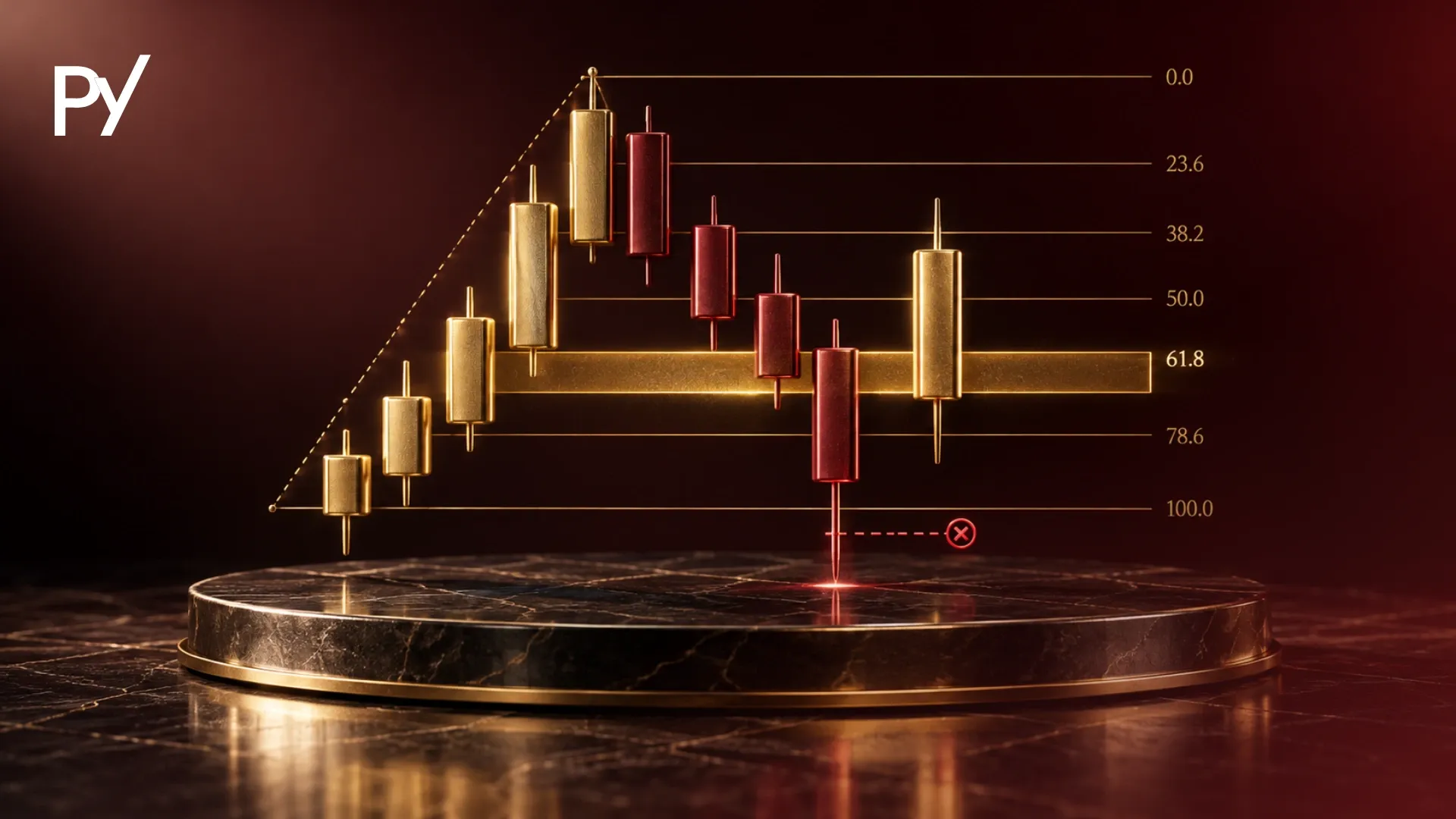
What Is Fibonacci Retracement? A Trader's Guide to Pullback Levels and Risk Management
Learn what is Fibonacci retracement, how to draw pullback levels, and how to protect drawdown. Read the full guide.
Trading Checklist: The Operational Framework That Keeps Funded Accounts Alive
Learn how an operational trading checklist protects your funded account from daily drawdown breaches. Read the full guide.
Paper Trading Meaning: How Simulated Trading Works and Why It Fails Prop Traders
Discover the paper trading meaning and why demo fills fail funded traders. Calibrate risk. Read the full guide.

What Is an Equity Curve? The Prop Trader’s Diagnostic Guide
Learn how an equity curve reveals hidden drawdown risks and protects your funded trading account. Read the full guide.