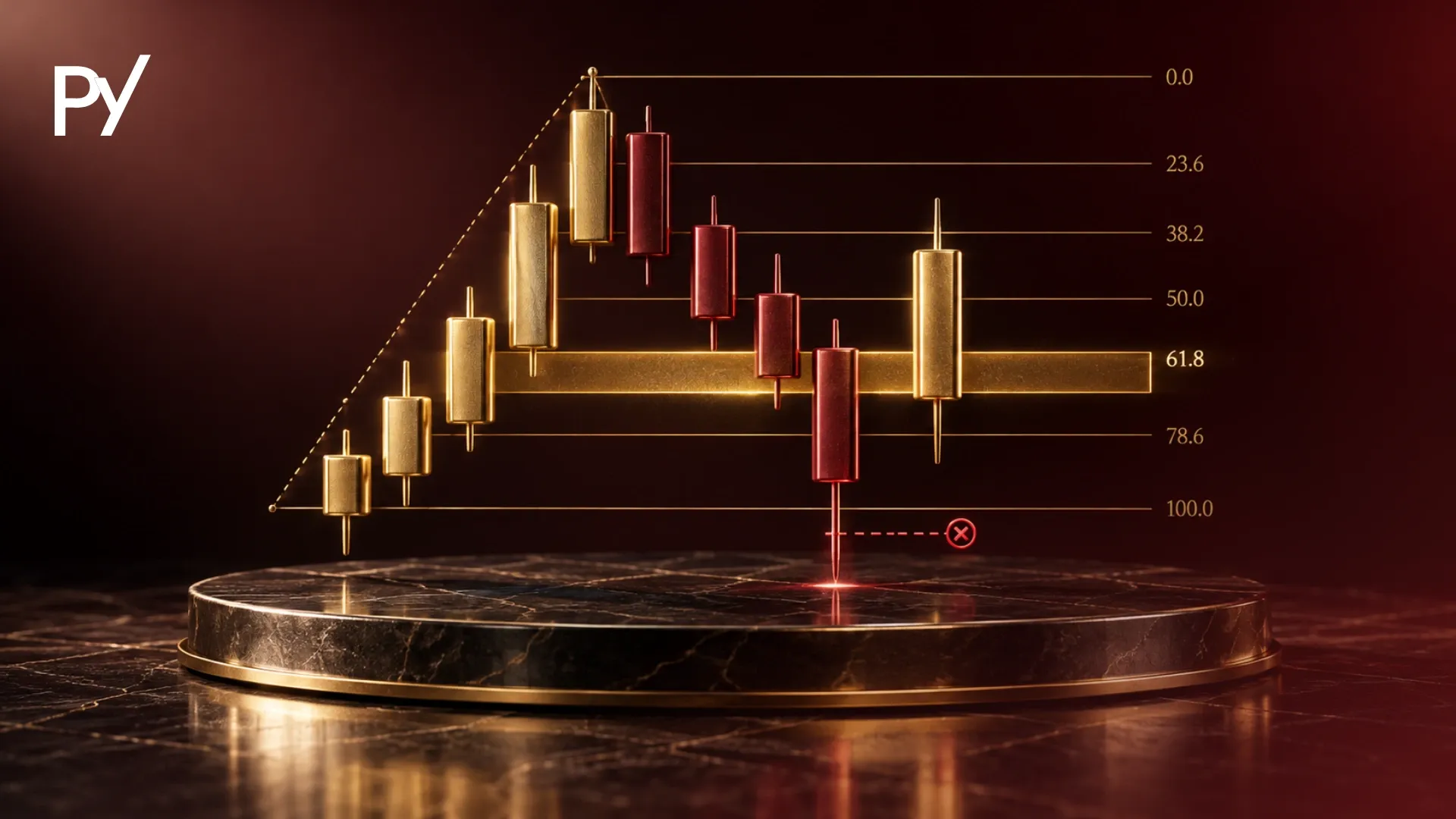
Risk management in futures trading involves calculating position size based on contract tick values and aligning maximum risk with strict account drawdown limits. By mapping stop-loss tick distances directly against daily loss thresholds, traders prevent premature account liquidation. This systematic approach preserves capital while navigating the volatility of CME equity index contracts.
Risk management in futures trading is the practice of controlling position size, contract tick exposure, and daily loss thresholds to prevent account liquidation while maximizing capital preservation.
Trading index futures like the E-mini S&P 500 or Micro Nasdaq offer intense intraday liquidity, but high leverage can erase an account balance within minutes.
For traders operating within funded programs, a standard stop-loss strategy isn't enough when trailing drawdowns continuously track open equity peaks.
This guide breaks down tick math, contract sizing, and the mechanical risk rules required to protect funded capital.
What Is Risk Management in Futures Trading?
Risk management in futures trading is the systematic control of leverage, contract selection, and stop execution designed to keep account losses well within predetermined daily and total drawdown parameters.
In standard retail trading, risk is often calculated as a percentage of static equity. In a funded account environment, however, risk management is defined by strict operational constraints set by evaluation programs.
Every trade must balance potential tick movement against hard limits, including daily stop thresholds, maximum trailing drawdowns, and mandatory session closing times. Developing core trading skills requires treating capital preservation as a structural requirement rather than a flexible option.
How Futures Risk Management Works: Tick Math, Margin, and Leverage
Futures risk management operates on exact tick values and contract multipliers, converting allowable dollar loss limits into precise market tick distances.
Unlike stock trading, where risk is measured in dollar movement per share, futures contracts trade in fixed minimum price fluctuations called ticks. To manage risk accurately, you must know the exact monetary value of a single tick for the contract you are trading:
E-mini S&P 500 (ES): 1 tick = 0.25 index points = $12.50 ($50.00 per full point).
E-mini Nasdaq-100 (NQ): 1 tick = 0.25 index points = $5.00 ($20.00 per full point) .
Micro E-mini S&P 500 (MES): 1 tick = 0.25 index points = $1.25 ($5.00 per full point) .
Micro E-mini Nasdaq-100 (MNQ): 1 tick = 0.25 index points = $0.50 ($2.00 per full point).
Day Trading Margin vs. Realized Leverage
Futures brokers and prop firms offer low intraday day-trading margins—often requiring as little as $500 to control one standard ES contract valued at over $250,000. This margin requirement represents the collateral needed to open a trade, not your actual risk exposure.
Operating with excessive leverage means a modest 10-point adverse move in the S&P 500 ($500 per ES contract) can breach a daily loss limit instantly if position sizing isn't controlled.
Order Execution Types: Market vs. Limit Stops
Executing risk rules effectively requires choosing the correct order execution types.
Stop-Market Orders: Automatically trigger a market order when your price threshold is touched. They guarantee execution, but in fast-moving market conditions (such as economic data releases), you may experience slippage.
Stop-Limit Orders: Only execute at your specified price or better. While they avoid slippage, fast market spikes can gap past your limit price entirely, leaving an unmanaged position open as the market moves against you.
In high-volatility futures markets, stop-market orders are the standard choice for hard risk management, ensuring positions close even if execution price shifts slightly.
Position Sizing for Funded Accounts: Navigating the Intraday Trailing Drawdown Trap
Position sizing for funded futures accounts must be calculated against your current drawdown cushion rather than total equity to survive intraday peak-equity drawdown tracking.
The most critical trap in funded futures trading is the unrealized peak-equity trailing drawdown (often called the high water mark). Unlike static drawdowns that only recalculate at the end of the trading day based on closed balance, trailing drawdowns update continuously in real time based on open trade profits.
If you allow open profit to give back gains, your account floor remains locked at its highest intraday peak. Sizing your positions based solely on a nominal $50,000 account balance ignores the fact that your effective drawdown cushion shrinks whenever open trades pull back.
Many traders fail futures evaluations while technically holding winning positions because they allow a multi-contract position to pull back 15 points off the session high.
Because intraday trailing drawdowns locked in at the equity peak, that pullback breached the loss threshold before the trade could be closed in profit. Always lock in gains or tighten trailing stops as open profits expand.
Sizing Formula for Futures Contracts
To determine your exact contract cap, divide your maximum allowable risk per trade by the dollar distance of your technical stop loss:
4 Tactical Futures Risk Management Rules
Tactical risk management in futures trading requires strict operational rules governing contract scaling, hard daily loss triggers, session closing times, and news volatility.
1. Contract-Tier Scaling
When starting an evaluation or managing a newly funded account, begin exclusively with Micro contracts (MES, MNQ). Micro contracts represent one-tenth the size of standard E-mini contracts, allowing you to fine-tune position sizing without exposing your initial drawdown cushion to sudden market shocks. Scale up to standard contracts only after accumulating an equity buffer above your initial starting balance.
2. Hard Daily Loss Thresholds
Do not rely on mental discipline to stop trading after a losing sequence. Set platform-level auto-liquidation settings within your trading software to lock your account if you hit a designated loss threshold. Setting your platform lockout at 75% of the firm's strict daily loss limit provides a safety buffer against unexpected slippage.
3. Flat-by-Close Discipline
Most futures prop firms enforce mandatory flat-by-close rules, requiring all speculative positions to be closed prior to the daily Chicago Mercantile Exchange (CME) session break (typically around 4:10 PM EST or 4:59 PM EST depending on the firm).
Holding trades into the session close risks auto-liquidation, penalty fees, or immediate account fail flags.Establish a personal alarm 15 minutes prior to mandatory closing windows to manually flatten open positions and cancel working limit orders.
4. News Event Volatility Controls
High-impact macroeconomic releases—such as Consumer Price Index (CPI), Non-Farm Payrolls (NFP), and Federal Open Market Committee (FOMC) rate decisions—cause sharp liquidity gaps in futures order books.
Slippage during these releases can push stop-market orders far past intended risk limits. Either flatten positions or widen parameters strictly in accordance with permitted firm rules prior to tier-one news events.
Common Futures Risk Management Traps That Blow Accounts
Funded futures accounts are most often destroyed by behavioral traps including averaging down into losing trades, ignoring index-specific volatility, and revenge trading.
Trap 1: Averaging Down into Losing Futures Positions
Adding contracts to a declining position (averaging down) is one of the quickest ways to breach a daily loss limit. Because futures leverage magnifies losses linearly, doubling contract size on a falling market rapidly depletes remaining drawdown cushion. If your initial thesis is invalidated and hits your stop, take the loss and wait for a clean structural setup.
Trap 2: Mismatched Volatility Sizing (NQ vs. ES)
The Nasdaq-100 (NQ) routinely displays a significantly higher Average True Range (ATR) than the S&P 500 (ES). Trading two contracts of NQ with the same tick stop distance as two contracts of ES exposes your account to meaningfully higher dollar volatility.
Always widen stop distances and downsize contract volume when transitioning from lower-volatility instruments (ES) to momentum-heavy markets (NQ).
After taking a full stop-out on NQ during an opening drive, the impulse to double contract size on the next setup is extreme. In a funded account environment, scaling up during a drawdown cycle compresses your remaining daily loss allowance to just a few ticks, almost guaranteeing a blown account.
Trap 3: Revenge Trading Post-Drawdown
Experiencing a stop-out creates emotional friction that often leads to impulse trades. Increasing leverage immediately after a loss to "recover" equity accelerates account destruction. Implement a mandatory cooling-off period after two consecutive losses to re-align with your systematic rules.
Managing Risk Effectively
Effective risk management in futures trading is what separates consistent funded traders from those caught in a continuous evaluation loop. By anchoring your position size to contract tick values, respecting intraday trailing drawdown mechanics, and maintaining strict execution rules around daily limits, you protect both your capital and your trading longevity.
FAQ
What is the biggest risk management mistake new futures traders make?
The biggest mistake new futures traders make is sizing positions based on account balance rather than total drawdown cushion. In funded programs, intraday trailing drawdowns track open profit peaks, meaning positions sized too large can breach loss thresholds during minor market pullbacks even if the initial setup was correct.
How do day trading margins impact risk management in futures?
Day trading margins lower the leverage collateral needed to enter a trade, often allowing traders to control standard index contracts for as little as $500. While this increases capital efficiency, low margins create false security that encourages over-leveraging, leading to rapid daily loss limit breaches when tick volatility surges.
What is the 1–2% rule in futures trading?
The 1–2% rule dictates that traders should never risk more than 1% to 2% of their total equity on a single trade setup. In futures trading, this dollar limit is converted into ticks based on contract multipliers, establishing the maximum allowable contract volume for a given stop-loss distance.
How do account-level daily loss limits work in futures trading?
Account-level daily loss limits automatically freeze trading activity or liquidate positions if net realized and unrealized losses reach a preset threshold during a single session. Setting platform lockouts slightly before the firm's strict limit provides a safety buffer against unexpected execution slippage during fast market moves.
Should risk management differ across ES, NQ, and Micro contracts?
Yes, risk management must account for differing contract tick values and average true range volatility. NQ contracts experience significantly wider price swings than ES contracts, requiring wider stop distances and smaller position sizes to keep dollar risk equivalent across instruments. Micro contracts offer granular sizing for precise risk control.
Disclaimer
Disclaimer: This guide was written with AI assistance, reviewed for accuracy by the Proptary editorial team, and kept up to date. It's for education only — not financial advice. Prop trading and the financial markets carry a significant risk of loss, so consider your own situation and consult a licensed advisor before you trade.
Proptary editorial team independently reviews prop trading firms, verifies payouts, and explains the rules that decide who keeps an account. We disclose affiliate relationships and publish methodology for every score.