A news trading strategy for funded traders is an execution framework that enters positions only after macroeconomic volatility stabilizes and spreads normalize. By waiting for initial impulse candles to exhaust and trading confirmed market structure shifts outside mandatory blackout windows, traders avoid the severe slippage and liquidity vacuums that cause immediate daily drawdown breaches.
A news trading strategy is a systematic execution framework designed to capture price momentum and market mispricings around scheduled macroeconomic data releases while managing the extreme liquidity voids that trigger adverse slippage.
Standard retail advice treats high-impact news like a shortcut to explosive gains, but volatility behaves very differently inside a funded account. A sudden 15-pip slippage or a minor rulebook violation can instantly breach your maximum daily loss limit and forfeit your funded status. This guide breaks down order-book mechanics, prop firm restriction windows, and a post-release execution model engineered to keep your capital safe.
What Is a News Trading Strategy in Forex?
A news trading strategy in forex is a structured method for entering and managing currency positions around major scheduled economic calendar releases, such as Non-Farm Payrolls (NFP), Consumer Price Index (CPI), and central bank rate decisions.
Macroeconomic releases act as catalysts that force institutional algorithms to reprice currency pairs in milliseconds. Prior to a major release, market participants establish a consensus forecast compiled by financial intelligence agencies like Bloomberg and Reuters. When the actual economic print deviates significantly from this consensus, the pricing imbalance triggers aggressive order flow as institutions adjust their portfolio models to reflect the new economic baseline.
The critical distinction in professional trading is separating systematic execution from uncalculated gambling. Retail traders often attempt to predict the number before the print or execute blind market orders into the first second of volatility. Conversely, a disciplined forex news trading strategy focuses on the structural aftermath of the print. This approach targets major currency pairs—primarily EUR/USD, GBP/USD, and USD/JPY—where interbank order books are deep enough to provide reliable execution once the initial volatility stabilizes.
Market Microstructure: What Actually Happens During High-Impact Releases
During a high-impact news release, tier-1 liquidity providers withdraw their limit orders from the interbank book, causing bid-ask spreads to blow out and creating an air pocket of liquidity known as a liquidity vacuum.
In normal market conditions, an institutional order book on EUR/USD contains millions of dollars in resting buy and sell limit orders within fractional pips of the current price. Seconds before a high-impact event like US CPI (traders call these red-folder events), automated market-making algorithms cancel these resting orders to avoid being stuck with toxic inventory, meaning positions that may quickly lose value, during unpredictable volatility. On institutional feeds, the EUR/USD bid-ask spread usually sits at a fraction of a pip, but it can widen sharply around major releases, as the illustrative figures in the table below show.
Market Condition
Bid Price
Ask Price
Spread
Liquidity Profile
Normal Order Book
1.08500
1.08502
0.2 pips
Deep institutional resting liquidity
News Release Liquidity Vacuum
1.08470
1.08620
15.0 pips
Thin resting liquidity; severe vacuum between quotes
This structural shift transforms how your orders execute. A stop-loss order is not a guaranteed price barrier; it is an instruction to trigger a market order once your price level is touched. When the market hits your stop loss inside a liquidity vacuum, there are no matching orders at your price. Your broker's bridge fills your order at the next available interbank quote, which may be 15 to 20 pips worse than your intended stop level.
Simulated prop firm environments introduce an additional layer of execution friction. While challenge evaluations run on demo server infrastructure, modern prop firms implement synthetic slippage algorithms and execution latency bridges designed to replicate real-world liquidity conditions. If an order triggers during peak news velocity, you will absorb simulated slippage that accurately reflects an illiquid market, turning what seemed like a minor risk into a severe drawdown event.
Macroeconomic news spikes breach funded accounts because adverse slippage and spread widening bypass stop-loss risk calculations and drive equity beyond the firm's strict daily loss limit.
Prop firm risk models operate under inflexible loss thresholds; many firms set a maximum daily loss limit of around 4% or 5% of the account, so confirm the exact figure in your own firm’s published rulebook. If your account breaches this floor by even a single dollar on an equity basis, automated risk management servers liquidate your positions and revoke your account credentials immediately.
When you trade during high-impact news, standard position sizing formulas fail. Consider a trader managing a $100,000 funded account with a 4% ($4,000) daily drawdown limit:
Item
Planned
What happened
Position
10 lots on EUR/USD with a 10-pip stop loss
A high-impact NFP print creates a 12-pip spread blowout and 16 pips of negative slippage
Fill
Exit at the planned 10-pip boundary
The market order fills 28 pips away from the entry
Loss
$1,000 (1% of the account)
$2,800
If the trader had already incurred a minor $1,300 loss earlier in the session, this single slippage event pushes total daily equity losses to $4,100, triggering an unrecoverable breach of the $4,000 maximum daily loss limit.
Trailing drawdown models amplify this vulnerability. If your firm calculates trailing drawdown from high-water mark equity (the highest equity your account has reached) rather than closed balance, a momentary spike in your favor that quickly reverses can pull your trailing drawdown floor higher. If a post-news whipsaw follows, the market may drop into your newly elevated drawdown floor before you can manually exit.
Prop Firm News Rules: Blackout Windows and Prohibited Models
Prop firms restrict any news trading strategy by imposing mandatory blackout windows around high-impact events and prohibiting automated high-frequency or straddle execution models.
A common restriction in prop trading is the blackout window. Leading firms frequently enforce a rule prohibiting traders from opening, closing, or modifying positions within 2 to 5 minutes before and after a high-impact (red-folder) macroeconomic release.
Rule Category
Common Restriction Window
Firm Enforcement Action
Trade Execution
±2 to ±5 minutes around red-folder news
Invalidation of trade; profits deducted from balance
Position Closure
Closing existing swing trades inside the window
Forfeiture of all profits generated during the trade
Pending Bracket Orders
Placing buy-stop/sell-stop grids before release
Account flagged for prohibited strategy; potential ban
High-Frequency EA Exploitation
Sub-second latency arbitrage on simulated feeds
Immediate contract termination and payout refusal
A common trap catching funded traders is closing an open trade during the blackout window. If you hold a long swing position on GBP/USD entering a Bank of England rate decision and decide to close the trade 60 seconds after the print to protect profit, you may trigger an immediate rule violation. Many firms penalize this by stripping all profits earned on the trade, and repeat infractions result in total account forfeiture.
Furthermore, permissions frequently vary between evaluation phases and live funded capital. Certain firms allow unrestricted news trading while you are taking a Phase 1 challenge because the firm is absorbing no external liquidity risk. Once you pass and receive a funded allocation, the firm transitions you to strict news restrictions to protect their capital bridge.
Automated systems often face closer scrutiny from prop firms. Utilizing an automated forex expert advisor designed to capture sub-second news spikes or exploit demo server feed latency is explicitly prohibited across virtually all major prop firms. Prop risk desks use automated auditing software that flags trades executed within milliseconds of an economic release, categorizing them as toxic latency exploitation.
Core News Trading Approaches: Straddles, Spike Chasing, and Confirmation
A news trading strategy usually follows one of three primary models: pre-news bracket straddles, instantaneous spike chasing, and post-release structural confirmation.
Model
Execution Risk
Spread Sensitivity
Prop Rule Compliance
Funded Account Suitability
Pre-News Bracket Straddle
Extreme
High (Dual Execution Risk)
Frequently Prohibited
Unsuitable
Instantaneous Spike Chasing
Very High
Extreme (Peak Slippage)
Often Violates Blackouts
Unsuitable
Post-Release Structural Confirmation
Controlled
Low (Normalized Spreads)
Usually compliant; confirm with your firm's rulebook
Ideal
1. Pre-News Bracket Straddle
This retail approach involves placing a pending buy-stop order above the current consolidation range and a pending sell-stop order below it 30 seconds before the data release, assuming the price will trigger one side and trend aggressively. In a funded account, this is a catastrophic setup. When the bid-ask spread widens from 0.2 pips to 15 pips, both pending orders are frequently triggered simultaneously at the widest point of the spread. The market then whipsaws, leaving the trader trapped in two simultaneous losing positions with double the expected drawdown.
2. Instantaneous Spike Chasing
Spike chasing occurs when a trader watches the release candle ignite and clicks a market order in the direction of the momentum. By the time your order processes through the broker's simulated execution bridge, you are buying at the absolute peak of the initial impulse candle. Institutional algorithms may take profit into your market order, which can cause the price to retrace and stop you out with heavy slippage.
3. Post-Release Structural Confirmation
This professional approach avoids the initial print entirely. The trader allows the initial candle to exhaust, waits for the firm's blackout window to expire, verifies that spreads have compressed back to standard levels, and analyzes the market structure shift created by the news impulse. This approach can help protect funded capital because it avoids the widest spreads and the largest slippage.
Step-by-Step Post-News Strategy for Funded Accounts
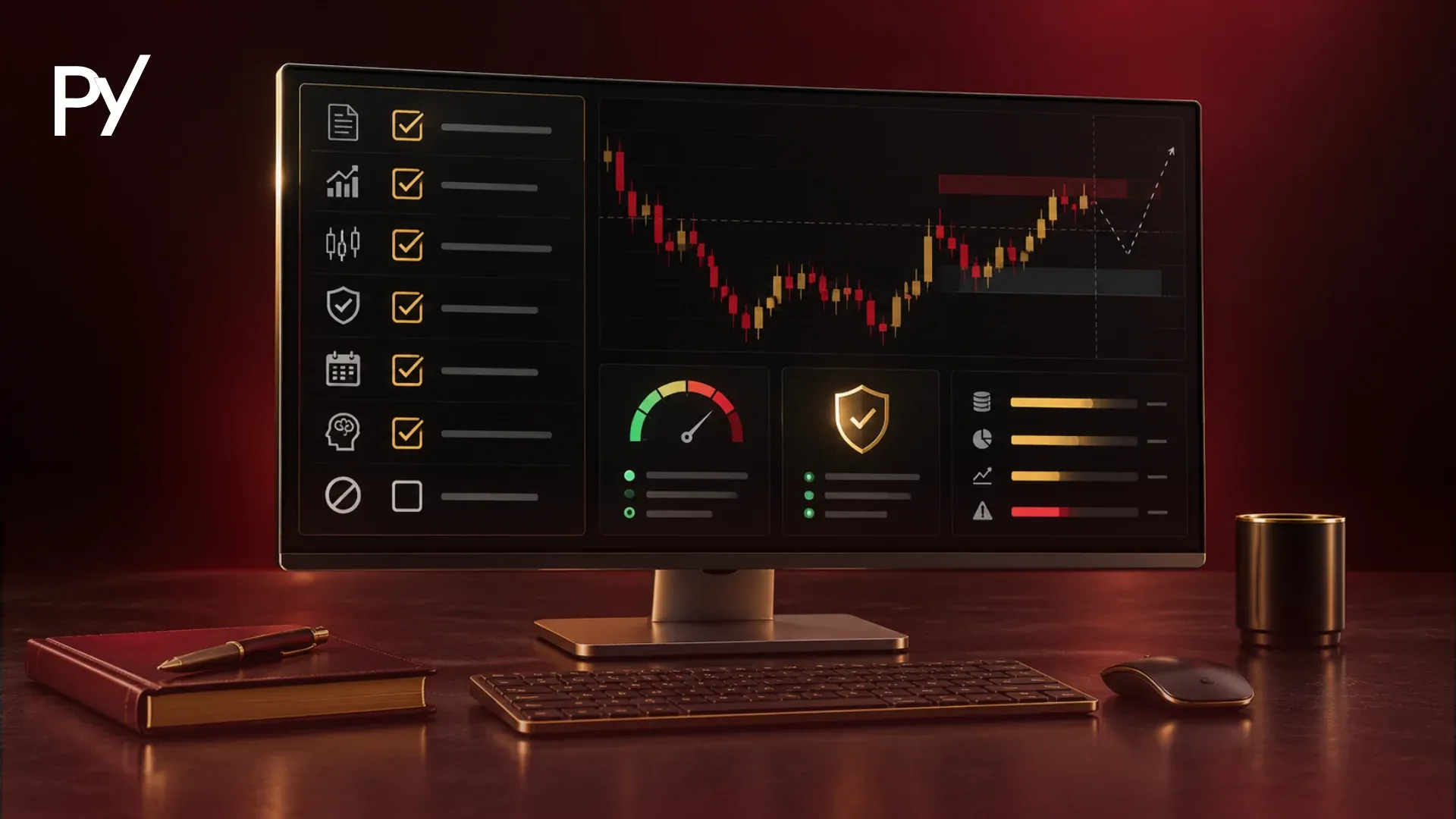
A four-step post-release framework is one of the more cautious news trading strategies for funded traders, because it waits for spread compression and enters only on confirmed market structure shifts outside blackout windows.
Step 1: Filter the Economic Calendar
Identify high-impact (red-folder) catalysts that create lasting institutional repricing: US CPI, Non-Farm Payrolls, FOMC Interest Rate Decisions, and ECB/BOE monetary policy statements. Note the consensus forecast and establish the threshold for a meaningful deviation. If actual data prints roughly in line with forecasts, market participants lack the fundamental catalyst required to sustain a trend; skip the session entirely.
Step 2: Clear the Blackout Buffer and Monitor Spreads
Step away from the execution terminal until the release occurs. Enforce a mandatory waiting period of 5 to 15 minutes post-print. This ensures two mandatory safety conditions:
You operate outside the 2- to 5-minute news blackout window that many prop firms use. Check your own firm’s rulebook first, because some firms use longer windows or different rules.
The interbank liquidity vacuum collapses, compressing the bid-ask spread back to standard operating thresholds (under 1.0 pip on EUR/USD).
Step 3: Identify the Liquidity Sweep or Market Structure Shift
Switch to the M1 or M5 timeframe to analyze how the market digested the news print. Look for one of two institutional footprints:
Footprint
What the candle does
Type
The Liquidity Sweep
The initial news candle spikes violently through key session highs or lows, sweeps resting liquidity, and immediately closes back inside the prior range with a long wick. This may signal institutional absorption and a possible reversal.
Reversal
Displacement and Break of Structure
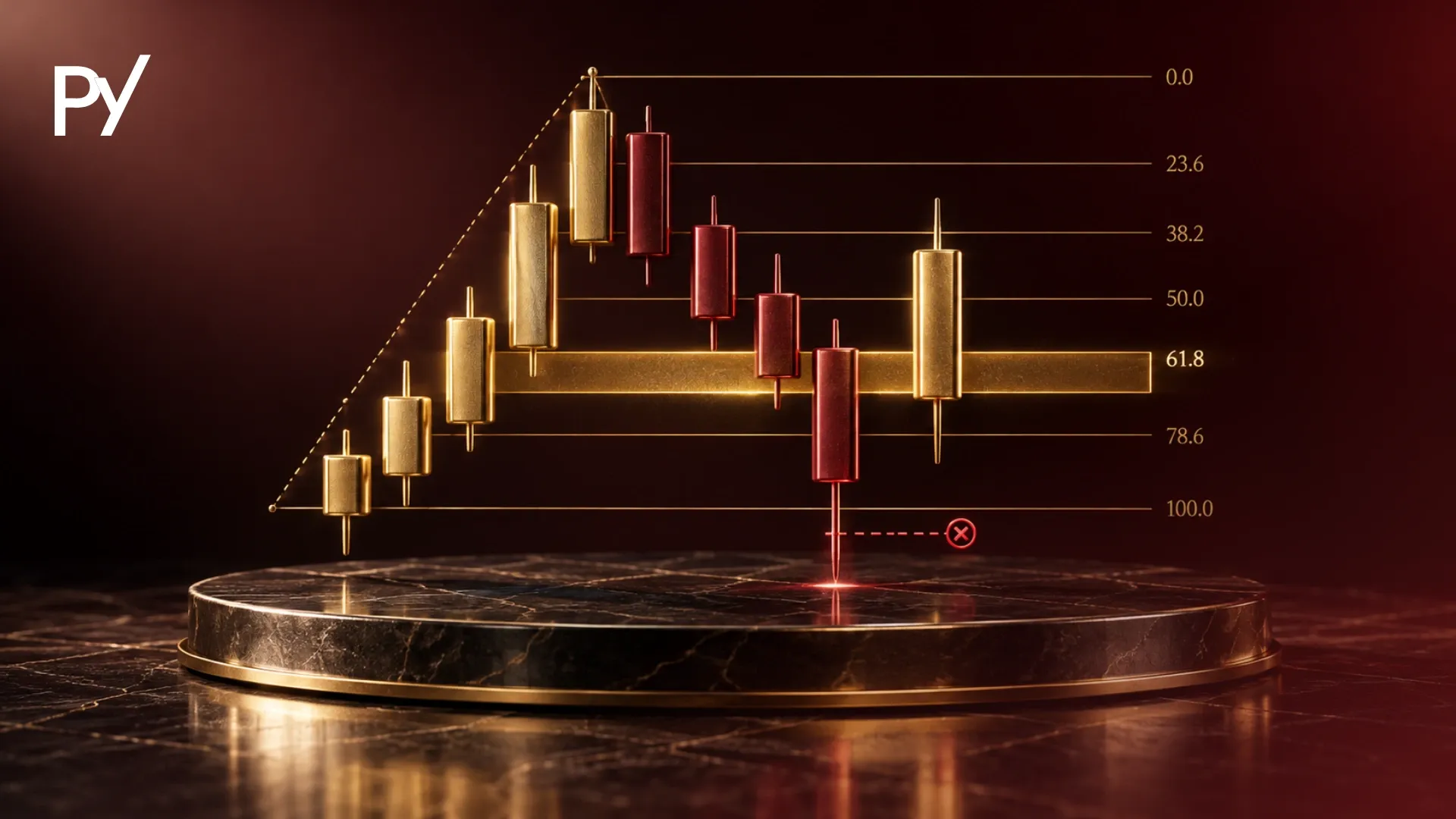
The initial spike aggressively closes beyond key swing levels with heavy volume and wide-range bodies, leaving an imbalance, also called a fair value gap (a stretch of price where one side of the market barely traded).
Continuation
Wait for a minor pullback that confirms a clear Market Structure Break (MSB) in your intended trade direction before considering an entry.
Step 4: Execute on the Pullback with Recalibrated Sizing
Never enter at market during price expansion. Place a limit order on the retest of the broken structural level or the origin of the displacement candle.
Because post-news Average True Range (ATR) remains elevated for several hours, you must recalibrate your risk. Reduce your standard position size by 50%. If your normal risk parameter is 0.5% per trade, allocate only 0.25% to the setup.
This wider volatility buffer allows you to use an appropriate technical stop loss without risking an unexpected breach of your daily loss limit. Developing the patience to trade post-release structure rather than impulse gambling is a foundational milestone in mastering trading skills for funded traders.
Common News Trading Traps That Wipe Funded Accounts
A flawed news trading strategy costs funded traders their accounts when they rely on pending order safety, confuse data prints with market pricing, size for low volatility, and ignore exit blackout rules.
1. The Pending Order Illusion
Many traders assume placing a buy-stop or sell-stop order guarantees entry at the specified price. When price gaps over your order level during a high-impact release, the broker fills your position at the first available market price on the other side of the gap. You absorb the entire price discrepancy as immediate, unbudgeted loss.
2. Trading the Headline Number
Entering a trade purely because an economic data point printed green or red on a calendar is a primary driver of account termination. If the broader financial market anticipated a strong economic print days in advance, institutional desks use the liquidity generated by retail news buyers to offload existing long positions. The currency pair sells off aggressively despite positive headline data. Trade the price structure, not the raw statistic.
3. Sizing with Normal-Market Volatility Models
Using fixed lot sizes calibrated for standard mid-session trading conditions leads to rapid liquidation during news events. In fast markets, an economic print can move a currency pair dozens of pips within minutes—a distance that may normally take an entire trading session to cover. If your stop loss is forced to 25 pips to clear the noise, maintaining your standard lot size inflates your dollar risk far beyond your account's daily loss threshold.
4. Violating the Exit Blackout
Traders who hold profitable swing positions entering high-impact events frequently panic when the initial volatility whipsaws their floating PnL. Closing a position manually within your firm's 2-minute blackout window constitutes an explicit rule breach. The firm's automated compliance monitors will detect the timestamp, deduct all profits earned from the trade, and may flag the account for administrative review.
Conclusion
A news trading strategy for a funded account requires an institutional risk-first mindset rather than a retail pursuit of momentum. Success is not determined by predicting data points or attempting to capture the initial explosive candle, but by respecting liquidity vacuums, adhering strictly to prop firm blackout windows, and executing only when market structure confirms directional control. By stepping back during the initial release and waiting for spreads to compress, you preserve your daily drawdown boundaries and position your funded capital for long-term consistency.
Mastering macroeconomic volatility is just one component of managing professional capital — develop the discipline and risk controls required to protect your account by exploring our complete curriculum on trading skills for funded traders.
FAQ
What is the most effective forex news trading strategy for prop firms?
Post-release structural confirmation is often considered one of the more cautious approaches. Rather than predicting prints or trading the opening impulse candle, traders wait 5 to 15 minutes for interbank spreads to normalize, then execute on a confirmed market structure break or liquidity sweep retest with reduced position sizing.
Can you trade high-impact news on a funded account?
Permissions depend on your specific firm's rulebook. Many prop firms permit news trading during evaluation challenges but enforce strict blackout windows on funded stages, prohibiting order execution within 2 to 5 minutes before and after red-folder macroeconomic releases.
Why do prop firms restrict trading during macroeconomic news releases?
High-impact releases trigger liquidity vacuums where tier-1 liquidity providers withdraw resting quotes, causing extreme spread expansion and adverse slippage. This environment introduces severe execution risk that simulated demo bridges and broker risk models cannot reliably hedge.
What happens if a stop loss slips during a news event on a prop challenge?
Stop-loss orders function as market orders once triggered. In a liquidity vacuum, your order fills at the next available market price, which may sit 10 to 20 pips past your stop level. This unbudgeted loss is deducted from account equity and can immediately breach maximum daily loss limits.
Is news straddling allowed on funded trading accounts?
Most prop firms prohibit bracket straddling with pending buy-stop and sell-stop orders around releases. Even when allowed, spread widening typically triggers both orders simultaneously at the worst possible execution prices, locking the account into dual losing positions during the ensuing whipsaw.
Disclaimer
Disclaimer: This guide was written with AI assistance, reviewed for accuracy by the Proptary editorial team, and kept up to date. It's for education only — not financial advice. Prop trading and the financial markets carry a significant risk of loss, so consider your own situation and consult a licensed advisor before you trade.
Proptary editorial team independently reviews prop trading firms, verifies payouts, and explains the rules that decide who keeps an account. We disclose affiliate relationships and publish methodology for every score.