Paper trading is simulated trading using virtual capital to execute hypothetical orders against real-time market data without risking real capital. It helps traders learn platforms, hotkeys, and rules, but simulated fills assume infinite liquidity and hide real slippage (fills at worse prices than you expected) and spread widening. Funded traders should add manual daily loss limits to avoid risk insensitivity.
The paper trading meaning in one line: it is the process of buying and selling financial assets using virtual capital in a simulated environment to practice execution without risking real capital.
You can generate consistent simulated returns on demo software for months, only to breach a daily loss limit within days of starting a paid prop firm challenge. This gap often exists because simulators lack real market liquidity and psychological pressure. This guide covers how paper trading works, the execution mirage of virtual fills, and how to calibrate a demo account for funded trading.
Paper Trading Meaning and Definition: How Does It Work?
What is paper trading? The paper trading meaning is the practice of executing hypothetical market orders on a live data feed without putting personal capital on the line. Before electronic exchanges, traders would literally write down their entries and exits on paper ledgers to track the performance of a strategy—which is where the paper trading meaning originates.
Today, the mechanics operate entirely through broker demo servers and charting simulators. You set up a virtual balance inside your trading platform and execute market, limit, and stop orders exactly as you would with a live account. The software receives live pricing data from the market but routes your orders to an internal simulated ledger rather than a live exchange or liquidity provider. In short, the paper trading meaning comes down to this: you practice execution with live prices, but nothing you win or lose is real.
If you are asking what paper trading can do for your actual trading career, the answer is that it serves strictly as an operational laboratory. It is the environment where you build platform fluency—learning how to assign hotkeys, manage order tickets, and read depth-of-market (DOM) tools—without the risk of a misclick costing you real money in a live account or ending a paid evaluation early.
Is Paper Trading Real Money and Is It Free?
Is paper trading real money? No, paper accounts operate strictly on synthetic, non-redeemable virtual balances that cannot be withdrawn, transferred, or converted to real currency under any circumstances. If you generate a $10,000 profit on a simulator, your financial return is exactly zero. That is the paper trading meaning for anyone hoping to earn from it: the results are practice data, not income.
Many beginners also ask: is paper trading free? The answer depends entirely on the fidelity of the simulation environment you require. Most retail brokers and charting platforms offer free demo accounts to attract new clients. However, these free environments often come with strict constraints.
If you want to execute high-fidelity backtesting with tick-by-tick historical replay, you generally have to pay for institutional simulation software. While the capital you are trading is fake, the historical level-2 data feeds require expensive infrastructure to maintain. You are paying for the accuracy of the data, not the virtual capital.
Stock Market Paper Trading vs. Forex and Futures Simulation
Stock market paper trading simulates centralized equity exchange fills, while forex and futures simulators replicate decentralized over-the-counter (OTC) pricing and centralized order book priority, respectively.
In stock market paper trading, you are typically tracking consolidated quotes from the equity exchanges your data feed covers. Because equities have varying degrees of float and volume, a stock market simulator often struggles to replicate the exact latency of routing an order to a specific exchange.
Forex simulation, by contrast, operates on decentralized OTC price feeds. Because there is no central exchange in forex, your demo account relies entirely on the synthetic spreads generated by your broker. This creates a gap during high-impact macroeconomic data releases.
If you are trading the NFP forex print on a demo account, your simulator will likely fill your order at the exact price you clicked. In the live market, that same order could suffer significant negative slippage if liquidity thins out around the release.
Futures simulation falls in the middle. Because futures trade on centralized exchanges like the CME, top-tier simulators can replicate exact queue priority, giving you a much more realistic picture of where your order sits in the matching engine.
The table below summarizes how each market’s simulator handles fills and where it falls short.
Market
How the simulator fills orders
Key limitation or strength
Stocks
Streams consolidated quotes from the exchanges your data feed covers
May not match the latency of routing an order to a specific exchange
Forex
Uses your broker's synthetic spreads from decentralized over-the-counter (OTC) price feeds
Demo fills can hide severe slippage during major news releases
Futures
Uses centralized exchange pricing such as the CME
Top-tier simulators can model queue priority, giving a more realistic picture of where your order sits
The Execution Mirage: Simulated Fills vs. Live Market Liquidity
Simulators fill orders assuming infinite liquidity at the current top-of-book price (the best available bid or ask), completely ignoring the friction of real market depth. This execution mirage is one of the main reasons strategies that look flawless on paper can underperform in live environments.
When you place a limit order for 50 lots on a demo account, the software simply checks if the price touches your level. If it does, you are instantly filled for the entire position size. In reality, a live order book requires another market participant to take the other side of your trade. If there are only 10 lots available at your price, you will receive a partial fill, and the rest of your order will sit in the queue—or suffer slippage (a fill at a worse price than you expected) if you entered via a market order.
This friction matters most when you evaluate stop-loss execution. A simulator will close your losing trade exactly at your designated price. A live environment, particularly during low-liquidity sessions or news spikes, can fill your stop well beyond your designated price as it hunts for the next available pocket of liquidity.
In an illustrative example, a 1% paper loss could become a 3% live loss, which can wreck the risk-to-reward ratio that your simulated strategy relied on. Actual slippage varies by instrument, session, and broker.
The Prop Firm Disconnect: Why Paper Trading Breaks Under Drawdown Rules
Standard demo accounts have open-ended balances, completely failing to replicate the strict daily loss limits and trailing drawdowns of a prop firm evaluation.
When you open a typical demo account, the software gives you $100,000 of virtual capital and zero constraints. If you drop to $80,000, you simply hold the trade until it recovers, or you press a button to reset the balance back to the starting line.
Prop firms operate in a completely different reality. A $100,000 prop firm challenge is not a $100,000 account. At many firms, it is closer to a $4,000 to $5,000 daily loss buffer and an $8,000 to $10,000 maximum drawdown limit, though the exact limits and the drawdown type differ by firm and program. Check the rules page of the firm you plan to buy.
If you size your paper trades against the $100,000 nominal balance instead of the strict drawdown buffer, you are far more likely to breach a loss limit and fail the evaluation. Paper trading without hard-coded loss limits teaches you how to survive infinite drawdown—a skill that has little application when you need to operate within a 4% daily pause boundary. The trading skills for funded traders start with strict risk limits like this one.
The Psychological Trap: Why Paper Profits Produce Overconfidence
Taking a simulated loss tends to trigger far less financial loss aversion than a real loss, which can lead traders to develop risk insensitivity and destructive execution habits.
Because the capital is virtual, your brain is unlikely to register the same stress response that real financial pain produces. You can hold a losing position deep into the red, widen your stop-loss, and eventually watch the trade return to breakeven. The simulator validates this behavior by logging a winning trade. In a live environment, that exact same behavior triggers a margin call or a blown prop challenge.
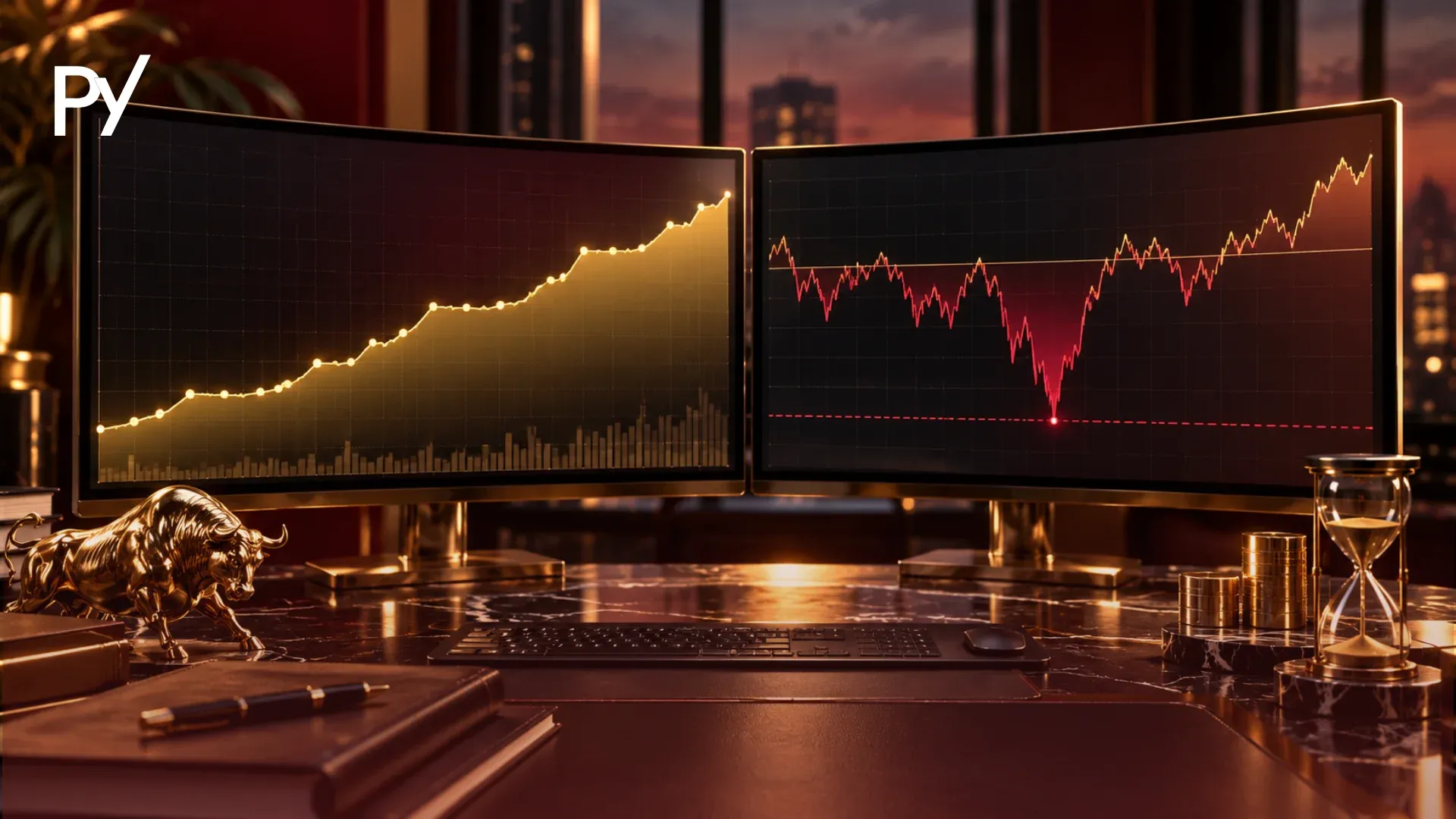
This dynamic creates overconfidence bias. Traders look at a perfectly smooth equity curve generated on a demo account and assume they are ready for six-figure capital allocation. When they transition to a paid challenge, the emotional jump can be sharp. The realization that real money is on the line introduces hesitation, premature exits, and revenge trading—psychological variables that simply do not exist in the vacuum of a simulator.
How to Start Paper Trading the Right Way: A 5-Step Funded Readiness Framework
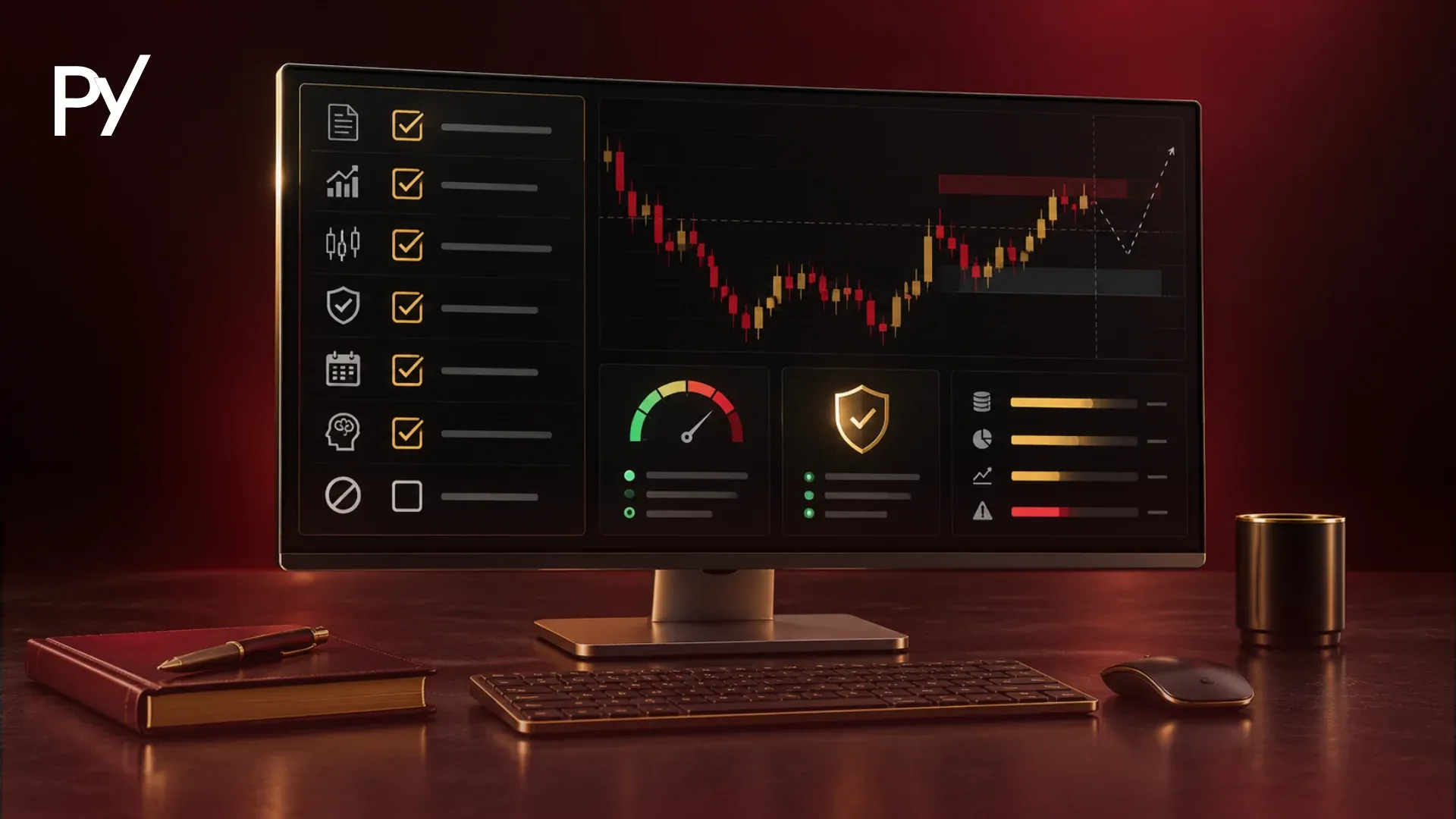
To start paper trading as a funded trader, you must manually constrain your demo account to match exact prop firm evaluation rules. If you do not enforce the friction yourself, the simulator will actively teach you bad habits. Here is how to start paper trading the right way:
Match your nominal size to your target challenge tier: Do not trade a $1,000,000 demo account if you plan to buy a $50,000 challenge. Calibrate your virtual balance to match your exact target.
Hard-code strict prop rules: Manually enforce the daily loss limit and maximum loss limit published by the firm you plan to buy. If you have not chosen a firm yet, use a 4% daily pause limit and an 8% maximum loss limit as a conservative placeholder. If you breach either number, you must treat the account as blown.
Manually deduct synthetic friction: Simulators do not charge proper commissions or factor in spread widening. You must manually deduct one to two ticks of slippage from every trade in your journal, including losing trades and stop-outs, to account for live order execution reality.
Keep a granular execution journal: Log your risk-multiple (R-multiple), your rule adherence, and your emotional state for every simulated entry.
Hit strict graduation benchmarks: Do not transition to a paid challenge after an arbitrary number of weeks. Require at least 50 to 100 consecutive trades with a positive expectancy (a strategy that earns more per trade, on average, than it loses) and zero drawdown violations over at least two consecutive months before paying a challenge fee.
Common Mistakes That Ruin the Transition to Funded Capital
A common and destructive mistake is treating a demo account as disposable by resetting the balance after every blowout. If there is no penalty for failure, there is no incentive to develop discipline. Hitting "reset" trains your brain to view a large loss as a minor inconvenience rather than a serious error.
Another frequent pitfall is disregarding news restrictions. Because paper platforms fill orders perfectly during high-impact data releases, traders build strategies around trading through consumer price index (CPI) or Federal Open Market Committee (FOMC) events. Some prop firms restrict trading within a short window, often a couple of minutes, around major news releases, and the exact rules differ by firm and program. If your paper strategy relies on news volatility, check your target firm’s published rules first, because it could trigger a rule violation once you take it live.
Finally, many traders struggle by scaling lot sizes arbitrarily. Because they do not fear losing the virtual capital, they increase their position size to artificially accelerate their simulated profit target. When they transition to a funded account, they cannot handle the psychological weight of the larger position and immediately revert to risk-averse, panicked execution.
Paper Trading Meaning in Practice: A Training Lab, Not Proof of Readiness
Paper trading is an essential tool for building platform fluency, validating strategy mechanics, and testing automated systems without risking real capital. However, because simulators assume infinite liquidity and strip away all psychological pressure, they can create an illusion of competence. A smooth demo equity curve does not mean you are a profitable trader; it simply means you understand how to click the buttons. That is the practical paper trading meaning for a funded trader: a safe place to learn the tools, not proof that you can trade.
To make the transition safely, you have to stop treating your simulator like a video game and start treating it like a heavily constrained operational laboratory. Once you have calibrated your virtual environment to mimic exact daily loss limits and strict execution rules, you can begin to master the core trading skills for funded traders.
Disclaimer: This guide was written with AI assistance, reviewed for accuracy by the Proptary editorial team, and kept up to date. It's for education only — not financial advice. Prop trading and the financial markets carry a significant risk of loss, so consider your own situation and consult a licensed advisor before you trade. Past performance, including results on a demo or simulated account, does not guarantee future results.
FAQ
Can you withdraw money or profits earned from paper trading?
No, you cannot withdraw or transfer profits earned from paper trading under any circumstances. Paper trading environments use simulated balances generated purely by software. While your trading results reflect how an account would perform under hypothetical conditions, the underlying ledger has no monetary value. To turn market performance into real cash payouts, you must trade your own personal capital or pass a prop firm evaluation and qualify for a payout under that firm's terms, though many funded accounts are simulated and payouts are never guaranteed.
How long should you paper trade before taking a funded challenge?
Rather than tracking calendar days or arbitrary weeks, base your graduation on a meaningful sample of trades. One practical benchmark is completing at least 50 to 100 consecutive trades with positive expectancy while staying within strict daily loss limits. A sample this size cannot confirm that your results will carry over to live conditions. If you cannot survive two consecutive months on a simulator without breaching a trailing drawdown, moving to a paid challenge puts your evaluation fee at much higher risk.
Why do retail brokers offer free paper trading accounts?
Brokers often offer free demo accounts as a low-friction customer acquisition tool to familiarize traders with their proprietary execution interfaces, charting platforms, and mobile apps. The aim is often to build platform comfort so that you eventually open a live account funded with your own money. However, because broker demo servers operate without real liquidity matching, their spreads and execution speeds are often significantly cleaner than live market feeds.
Does paper trading show realistic Level 2 depth-of-market data?
Most basic retail demo accounts do not provide true Level 2 market depth or tick-by-tick order book queue priority. Instead, standard simulators only track the Level 1 best bid and ask prices and assume instant execution. To access high-fidelity depth-of-market simulations where your limit order actually waits in line behind other market participants, you generally need paid historical replay platforms or institutional-grade simulation software.
Can you test automated trading bots or algorithms on a paper account?
Yes, paper trading environments are an excellent laboratory for debugging automated execution scripts, checking API webhook latency, and validating technical code logic before deploying live capital. However, forward testing algorithms on a paper account still fails to capture real-world execution friction, such as order queue priority during news spikes, partial fills on illiquid instruments, and price and speed differences between liquidity providers.
Disclaimer
Disclaimer: This guide was written with AI assistance, reviewed for accuracy by the Proptary editorial team, and kept up to date. It's for education only — not financial advice. Prop trading and the financial markets carry a significant risk of loss, so consider your own situation and consult a licensed advisor before you trade.
Proptary editorial team independently reviews prop trading firms, verifies payouts, and explains the rules that decide who keeps an account. We disclose affiliate relationships and publish methodology for every score.