Volume Weighted Average Price (VWAP) is an intraday technical benchmark that calculates an asset's true average price weighted by cumulative trading volume. Unlike price-only moving averages, VWAP emphasizes price levels with heavy volume to reveal institutional fair value. Funded traders use VWAP to identify dynamic support and resistance while protecting daily drawdown limits.
Volume Weighted Average Price (VWAP) is an intraday technical benchmark that calculates the true average price of an asset throughout a single session, weighted by cumulative trade volume.
Fading price rejections back toward the VWAP baseline is a staple of retail day trading, but executing mean-reversion trades against sustained institutional order flow can trigger rapid daily drawdown breaches on funded accounts.
Understanding how cumulative volume anchors fair value helps you execute disciplined intraday entries without risking your evaluation challenge. This guide breaks down VWAP mechanics, calculation formulas, session resets, and high-probability execution strategies tailored for prop risk rules.
What Is VWAP? Mechanics and Calculation
VWAP measures the volume-weighted average price at which an asset traded throughout a specific intraday session, providing a dynamic benchmark for fair market value. Understanding VWAP starts with recognizing how it differs from traditional price-only technical indicators.
Unlike simple moving averages (SMA) or exponential moving averages (EMA), which evaluate price over a set number of historical candles, VWAP factors in the volume executed at every price level. A single minute candle with 10,000 contracts executed exerts 10 times more influence on the VWAP line than a candle with only 1,000 contracts.
The VWAP Formula
The mathematical calculation runs cumulatively throughout the trading day using the asset's typical price and volume for each period:
VWAP = Σ(Typical Price × Volume) ÷ Σ Volume
where the typical price for any given candle is defined as:
Typical Price = (High + Low + Close) ÷ 3
To calculate VWAP step-by-step:
Calculate the typical price for the first candle of the session.
Multiply the typical price by that candle's total volume to calculate the volume-weighted period value.
Maintain a cumulative running total of the volume-weighted values.
Maintain a cumulative running total of session volume.
Divide the cumulative volume-weighted value by the cumulative volume.
Because the formula relies on cumulative summation, the VWAP calculation begins at the session open and builds data weight as trading progresses.
VWAP vs. Standard Moving Averages
Standard moving averages suffer from lag and distortion during rapid institutional expansion. If institutional buyers aggressively accumulate futures contracts during an exchange open, an EMA will slowly curve upward based on price change alone. VWAP reacts instantly to the high-volume surge, accurately shifting fair value upward to reflect where capital is actually committing.
Session Reset Mechanics: RTH, Globex, and Anchored VWAP (AVWAP)
Intraday VWAP calculations reset to zero at the beginning of each trading session, meaning cumulative volume and price data restart from the official market open. Because the calculation builds cumulatively, a VWAP line operating at 3:00 PM carries significantly more structural weight than a line operating at 9:35 AM.
Managing Session Reset Boundaries
Prop platform configurations often dictate whether your VWAP indicator calculates across 24-hour electronic sessions or strictly during Regular Trading Hours (RTH):
Regular Trading Hours (RTH): Resets at the local equity market open (e.g., 9:30 AM EST for US equities and index futures). RTH VWAP isolates high-volume institutional floor liquidity.
Globex / 24-Hour Session: Resets at the official futures exchange rollover time. Globex VWAP tracks overnight volume distribution alongside cash market hours.
If your charting platform is set to a GMT timezone default while trading US equity indices, your VWAP line will reset mid-session, producing incorrect fair-value baselines during prime evaluation trading windows.
Anchored VWAP (AVWAP)
Anchored VWAP allows you to manually set the starting point of the cumulative calculation rather than relying on automatic daily session opens. Developed by Brian Shannon, AVWAP lets traders anchor the volume-weighted baseline to specific structural catalysts:
Economic News Releases: Anchoring to the candle of a Non-Farm Payrolls (NFP) or Consumer Price Index (CPI) report tracks institutional position building following high-volatility events.
Market Structure Pivots: Anchoring to swing highs, swing lows, or major gap-open candles measures fair value relative to critical trend originations.
Why VWAP Matters for Funded Accounts: Institutional Context
Institutional trading desks use VWAP as an execution benchmark to fill large block orders with minimal market impact, making it a critical liquidity map for funded traders. Knowing how to use VWAP effectively requires seeing the indicator through the lens of institutional execution quality.
When an institutional fund manager orders a desk to buy 5,000 E-mini S&P contracts, executing the entire order at once would create massive slippage. Instead, algorithms execute the order gradually throughout the day, aiming to achieve an average fill price below the current VWAP line.
Identifying Intraday Bias
Bullish Institutional Bias: When price trades consistently above the VWAP line, institutions buying below VWAP consider those fills value pricing. Buyers are aggressively paying above fair value to build positions, establishing a clear bullish trend.
Bearish Institutional Bias: When price trades below VWAP, institutional sellers control market flow. Fills above VWAP are viewed as premium pricing for short distribution.
Dynamic Support and Resistance
Because institutional algorithms target VWAP for execution quality, price tests of the VWAP line frequently trigger rapid liquidity responses. When price pulls back to test VWAP from above in a strong uptrend, institutional passive buy limit orders absorb retail selling, turning the indicator into dynamic structural support.
Many funded traders treat VWAP as a simple moving average line and place stop-losses directly on it. During high-volatility session opens, institutional liquidity sweeps frequently spike through the VWAP line to fill orders before reversing.
Placing your invalidation stop beyond local market structure rather than directly on the indicator line protects your daily drawdown limit from fakeouts.
Core VWAP Trading Strategies for Prop Traders
Executing a VWAP trading strategy on a funded account requires combining volume-weighted fair value with strict drawdown limits to protect capital during market extensions. Funded account constraints demand high win-rate or asymmetric reward-to-risk setups that minimize consecutive losses.
This approach trades directional momentum by waiting for price to retest the baseline during an established intraday trend.
Setup: Confirm an established trend where price has traded cleanly above VWAP for at least 30 to 45 minutes following session open.
Trigger: Wait for a low-volume pullback to test the VWAP line. Entry triggers when a reversal candlestick (such as a bullish hammer or engulfing candle) closes back in the direction of the primary trend.
Risk Control: Place the stop-loss 2 to 3 ticks below the recent swing low, ensuring total position risk remains under 0.5% of your maximum daily drawdown limit.
Strategy 2: VWAP Breakout with Volume Confirmation
Breakout VWAP trading strategies target volatile expansion moves when price breaks out of a tight consolidation range surrounding the VWAP baseline.
Setup: Identify a tight consolidation range (squeeze) where price weaves across VWAP during low-volatility conditions.
Trigger: Enter on a strong 5-minute candle closing fully outside the consolidation range, accompanied by an expansion in trade volume relative to the 20-period volume average.
Risk Control: Place the invalidation stop on the opposite side of the VWAP line. If price fails to hold the breakout momentum and crosses back through VWAP, exit immediately to protect evaluation capital.
Strategy 3: Standard Deviation Band Mean Reversion (Fading Extensions)
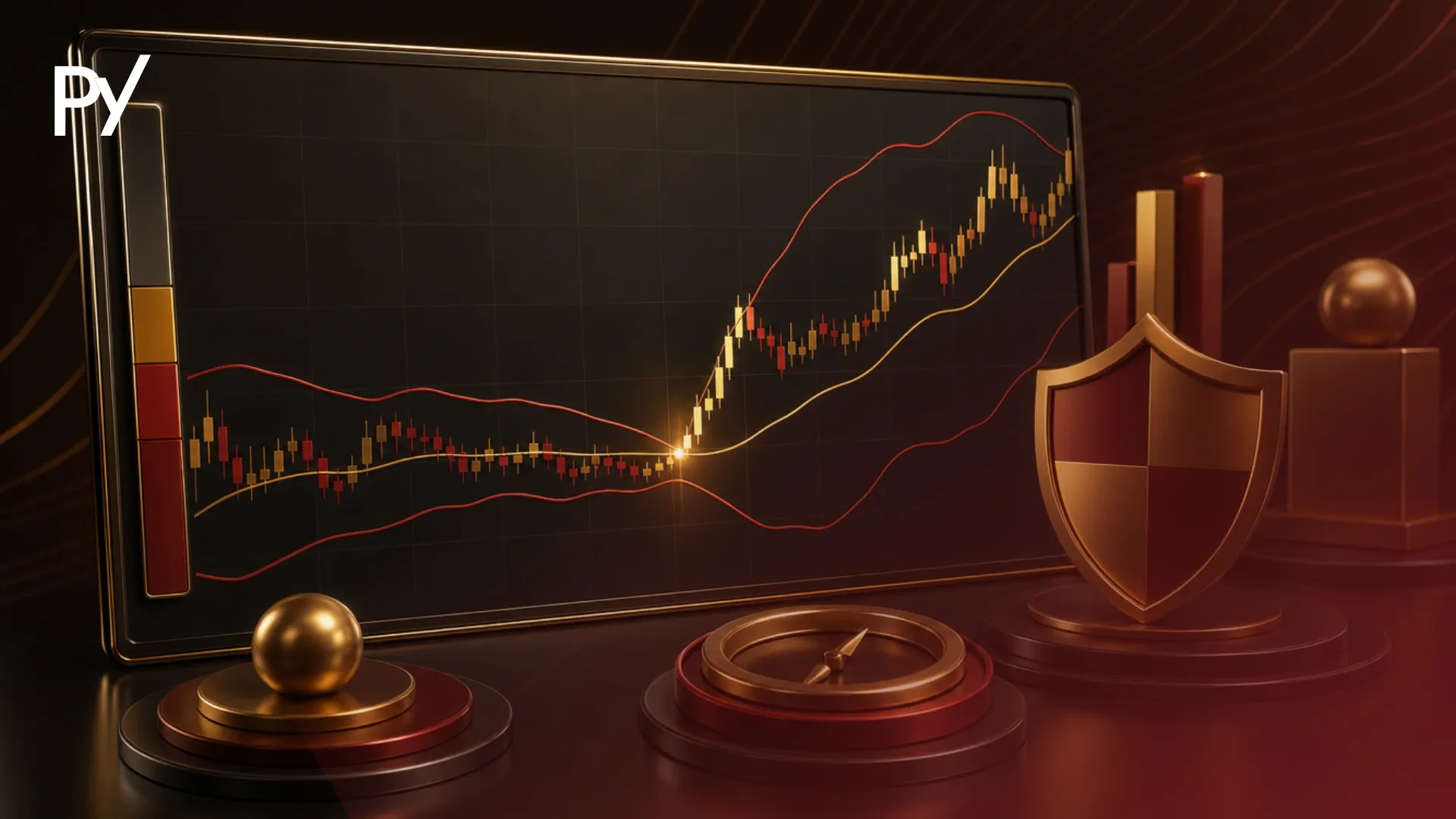
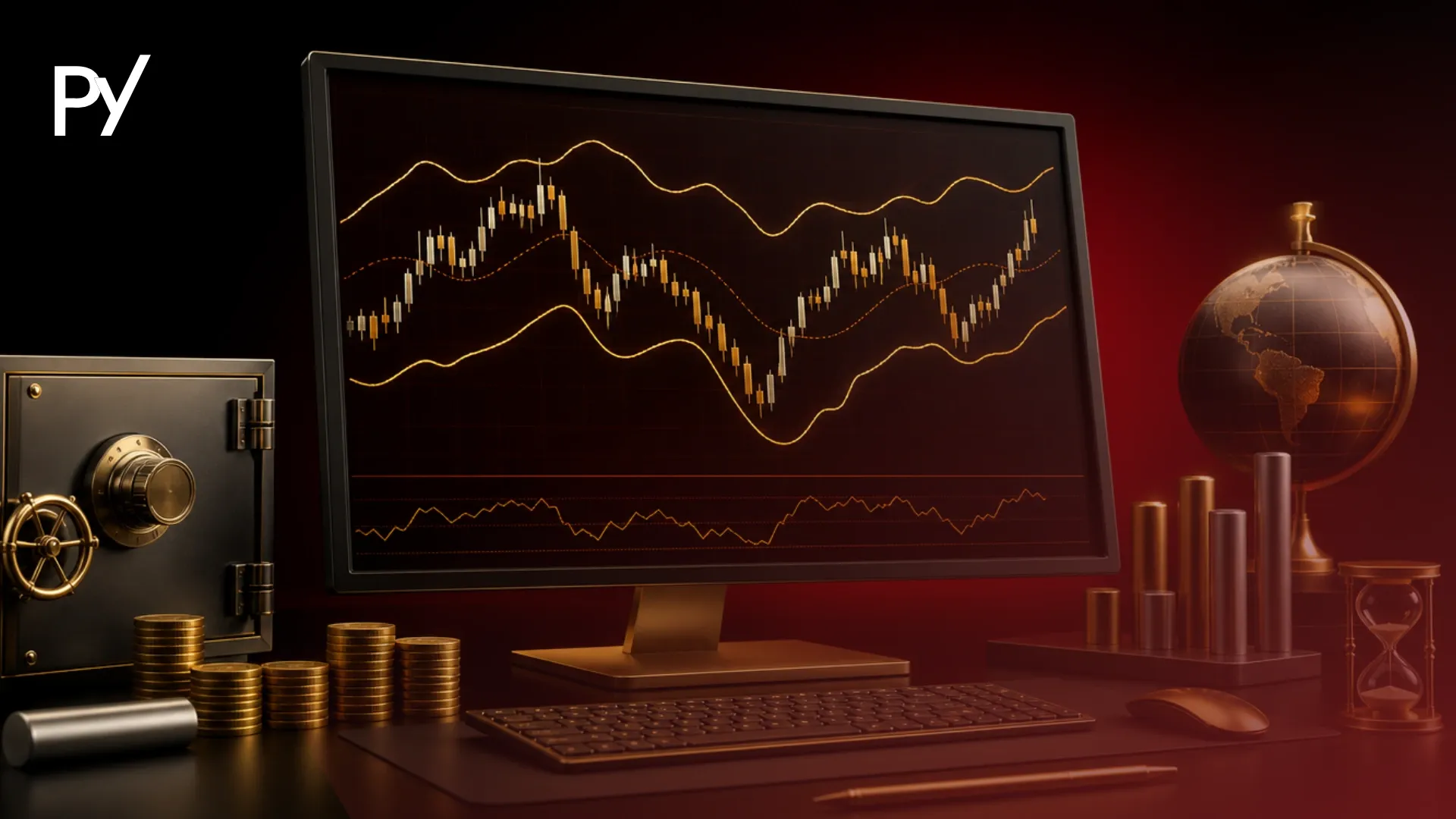
VWAP standard deviation bands calculate volatility spreads above and below the fair-value baseline (typically +1σ, +2σ, −1σ, and −2σ).
Setup: Wait for price to stretch aggressively into the +2σ upper band (overbought) or −2σ lower band (oversold) without breaking key daily resistance/support levels.
Trigger: Look for price exhaustion signals, such as long-tail wick rejections at the +2σ band, followed by a lower candle close back inside the bands. Target a reversion back to the central VWAP baseline.
Prop Account Warning: Fading strong trend moves is the single fastest way to breach trailing drawdown limits. Fading standard deviation extensions should only be executed during low-impact, range-bound market environments.
Strategy Type
Execution Trigger
Win-Rate Profile
Prop Account Risk Level
VWAP Pullback
Reversal candle at VWAP baseline during trend
Directionally aligned with trend (tends to favor the trader)
Highly conditional — favorable only in range-bound conditions, unfavorable in strong trends
High (risks breaching daily loss limits)
Common VWAP Traps That Blow Prop Challenges
Understanding structural traps allows you to protect your evaluation account from unexpected drawdown spikes.
Trap 1: Counter-Trend Fading on Strong Trend Days The most destructive mistake funded traders make is attempting to short an asset simply because it sits far above the VWAP line during an institutional trend day. On days driven by heavy fundamental buying (such as index breakout days or post-earnings expansions), price can ride the +2σ standard deviation band higher all afternoon without returning to VWAP. Fading this move repeatedly will breach your daily loss limit before the session ends.
Trap 2: Late-Session Weighting Decay Because VWAP is cumulative, late-day price action struggles to shift the calculation. By 3:30 PM EST, millions of contracts have built into the formula's denominator. A major price move late in the afternoon barely bends the VWAP line, causing the indicator to lag significantly behind real-time price action. Avoid relying on late-session VWAP crossovers for trend direction signals.
Trap 3: Trading VWAP in a Vacuum VWAP indicates fair value, but it does not measure momentum or higher-timeframe context on its own. Taking trades solely because price touches VWAP leads to chop during range-bound conditions. Always pair VWAP location with structural price action and momentum indicators like the MACD histogram to verify momentum alignment before committing risk capital.
Structuring Entries With Institutional Order Flows
Volume Weighted Average Price provides funded traders with an objective view of institutional fair value, separating meaningful price expansion from low-volume market noise. By anchoring calculations to official session opens and using standard deviation bands to gauge volatility extensions, you can structure intraday entries that align with institutional order flow while keeping stop-losses strictly defined.
To protect your funded account, remember these core principles:
Use VWAP as an intraday structural guide rather than a standalone buy/sell indicator.
Never fade standard deviation extensions on high-volume institutional trend days.
Verify platform session reset settings so your fair-value baseline aligns precisely with market open liquidity.
FAQ
What is VWAP and how is it calculated?
Volume Weighted Average Price (VWAP) is calculated by taking the sum of the typical price multiplied by volume for each intraday period and dividing it by total cumulative session volume. Typical price equals the average of the candle high, low, and close prices. The cumulative sum resets to zero at the start of each new trading session.
What is the difference between VWAP and a standard moving average?
Simple and exponential moving averages calculate price changes over a set number of historical periods while ignoring trade volume. In contrast, VWAP incorporates cumulative trade volume into its formula, giving greater weight to price levels where institutional volume was executed. This establishes true volume-weighted fair value rather than lagging price averages.
How do prop traders use VWAP to spot intraday trends?
Prop traders evaluate price position relative to the VWAP baseline to determine market bias. When price trades consistently above VWAP, buyers maintain market control and view pullbacks to the indicator as value entries. When price remains below VWAP, sellers dominate. Trading in the direction of the VWAP slope aligns entries with institutional order flow.
What is Anchored VWAP (AVWAP) and when should you use it?
Anchored VWAP allows traders to manually select a specific starting point for the volume-weighted calculation rather than defaulting to the daily market open. It is best used to track volume-weighted benchmarks following major macroeconomic events, such as NFP or CPI reports, or from key structural swing highs and lows.
Why does fading price back to VWAP cause daily drawdown breaches?
Fading extended price moves back toward VWAP assumes the market will revert to the mean. On high-volume institutional trend days, price can continuously expand along upper or lower standard deviation bands without returning to VWAP. Shorting into sustained momentum repeatedly triggers stop-losses, rapidly breaching daily loss limits on evaluation accounts.
Disclaimer
Disclaimer: This guide was written with AI assistance, reviewed for accuracy by the Proptary editorial team, and kept up to date. It's for education only — not financial advice. Prop trading and the financial markets carry a significant risk of loss, so consider your own situation and consult a licensed advisor before you trade.
Proptary editorial team independently reviews prop trading firms, verifies payouts, and explains the rules that decide who keeps an account. We disclose affiliate relationships and publish methodology for every score.