Day trading is structurally distinct from gambling because traders can construct a positive expected value using mathematical probability and strict risk management. However, executing trades without hard stop-loss limits, predefined position sizing, or emotional discipline converts active trading into pure financial gambling. Probability management and capital preservation define the line between trading and gambling.
Day trading is the practice of buying and selling financial instruments within the same day, which structurally differs from gambling because outcomes can be controlled mathematically through positive expected value and strict risk management.
Too many traders treat price charts like a roulette wheel, betting randomly on green or red candles while hoping for a massive payout. Without rules, active trading quickly devolves into a high-speed game of pure chance. So, is day trading gambling? This guide covers probability mechanics, the behavioral biases that quietly wipe accounts, and the rigid risk parameters required to stop trading like a gambler.
Is Day Trading Considered Gambling or Investing?
Day trading sits directly between long-term investing and fixed-odds gambling, acting as active financial speculation where skill and risk control determine long-term profitability. Gambling relies purely on chance within a system designed to guarantee a mathematical loss over time, known as the house edge. Investing focuses on deploying capital into assets with the expectation of compounding growth over years or decades, largely ignoring short-term price fluctuations.
Day trading operates in a different lane. It is not long-term investing, as the goal is to extract immediate cash flow from intraday price volatility. However, it is fundamentally different from a casino game because the participant has total control over their risk exposure, the timing of their entries, and the size of their potential losses.
When executed correctly, day trading is an active risk-management profession. When executed poorly by someone acting on impulse, it is mathematically identical to gambling.
The ethical and legal distinctions are also clear. Regulatory bodies treat financial market speculation as a legitimate, albeit high-risk, investment activity. For traders questioning the ethical or religious implications of speculative risk, understanding whether an activity relies on analysis versus pure chance is often the determining factor in asking is day trading haram. The dividing line always comes back to whether the trader relies on probability or blind luck.
Day Trading vs. Gambling: Expected Value and Risk Mechanics
The core mathematical difference between gambling and trading is expected value (EV)—a formula that calculates the average outcome of a given action repeated over time. In casino gambling, the expected value is permanently fixed and mathematically negative for the player. The casino has an unbeatable edge. In day trading, a trader can engineer a positive expected value through a combination of win rate and reward-to-risk ratios.
The formula for Expected Value (EV) is:
EV = (Win Rate × Average Win) - (Loss Rate × Average Loss)
If you play American roulette, the presence of the 0 and 00 slots means the house has a 5.26% edge. No betting strategy, emotional discipline, or pattern recognition can change that negative EV. Over 1,000 spins, you will lose money.
In trading, the odds are not fixed by a casino. A trader might develop a strategy with only a 40% win rate. However, if their strict risk management ensures their average win is $300 and their average loss is capped at $100, the math changes entirely:
Wins: 40% × $300 = $120
Losses: 60% × $100 = $60
Expected Value: $120 - $60 = +$60 per trade
This positive mathematical expectancy is the single factor that separates a professional trader from a gambler. The professional curates a statistical edge and executes it over a large sample size of trades. The gambler relies on feeling, ignores the math, and hopes for a fortunate outcome on a single, oversized bet.
The "Strategy Illusion": Why ~90% of Retail Traders Bet Like Gamblers
Having a technical pattern or indicator does not stop a trade from being a gamble if you execute it without hard risk parameters and position sizing. This is the "strategy illusion." Thousands of retail traders memorize chart patterns, assuming that knowledge alone makes them traders. But without risk control, they are simply using technical analysis to justify placing high-stakes bets.
When an unmanaged retail trader sits down at the charts, they fall victim to the exact same behavioral biases that drain bank accounts at blackjack tables:
Loss Chasing and Revenge Trading: This is the most destructive habit in speculation. After taking a loss, the trader feels an emotional sting and immediately re-enters the market with a larger position size to "win back" the money. They abandon their positive EV strategy and transition into pure gambling, risking a loss several multiples larger than their original stop-loss, on a single emotional impulse.
The Gambler's Fallacy: This is the cognitive bias where a person believes that a specific outcome is "due" simply because it hasn't happened recently. A trader sees five consecutive red, bearish candles and assumes the next one must be green. Markets do not care about recent sequences. Buying a falling asset just because it has dropped for hours is not trading; it is blindly betting on reversion.
Overconfidence Bias: When a gambler wins early by pure luck, they attribute the success to skill. Retail traders who make money on their first few trades often drastically increase their leverage, assuming they have mastered the market. The inevitable string of losses quickly wipes out their account because they lacked the defensive framework to survive normal market variance.
Regulatory data backs this up: SEBI’s FY25–FY26 study found that 87.7% of individual futures-and-options traders lost money in FY26 after transaction costs, and a 2020 academic study using Brazilian regulator (CVM) data found that 97% of retail day traders who persisted beyond 300 trading days lost money, largely due to transaction costs and an inability to control emotional risk-taking.
How Prop Firm Drawdown Rules Enforce Statistical Discipline
Prop firms use strict daily loss limits and trailing drawdowns to forcefully inject risk management into a trader's workflow, instantly shutting down any transition into gambling. When you trade your own unmanaged retail capital, no one stops you from risking your entire balance on one erratic trade. Prop firm challenges are designed to strip away that freedom.
The maximum daily loss rule operates as a forced circuit breaker. If a firm sets a 5% daily limit, hitting that number instantly locks the account. A trader who begins to revenge trade or drastically average down into a losing position will hit this limit and lose their challenge. By enforcing this hard stop, the firm mathematically prevents the trader from gambling their way into a total liquidation.
Trailing drawdowns act as an even stricter safeguard. Measured from your highest peak account balance or peak equity, a trailing drawdown forces you to protect your profits. If your balance hits a new high, the drawdown floor rises with it. If you begin betting wildly and give back your recent gains, you breach the rule and lose the account.
Violating these limits reveals a critical truth: the moment you size a position so large that a single normal market move can breach your daily loss limit, you are no longer operating a positive EV system. You are treating the firm's capital like a lottery ticket. The rules exist specifically to weed out gamblers and identify those who understand capital preservation.
How to Stop Trading Like a Gambler: Practical Risk Parameters
You stop trading like a gambler by pre-defining your risk per trade as a fixed percentage and refusing to execute any setup without a hard stop-loss. Professional trading is remarkably boring; it requires executing the same parameters repeatedly without emotional deviation.
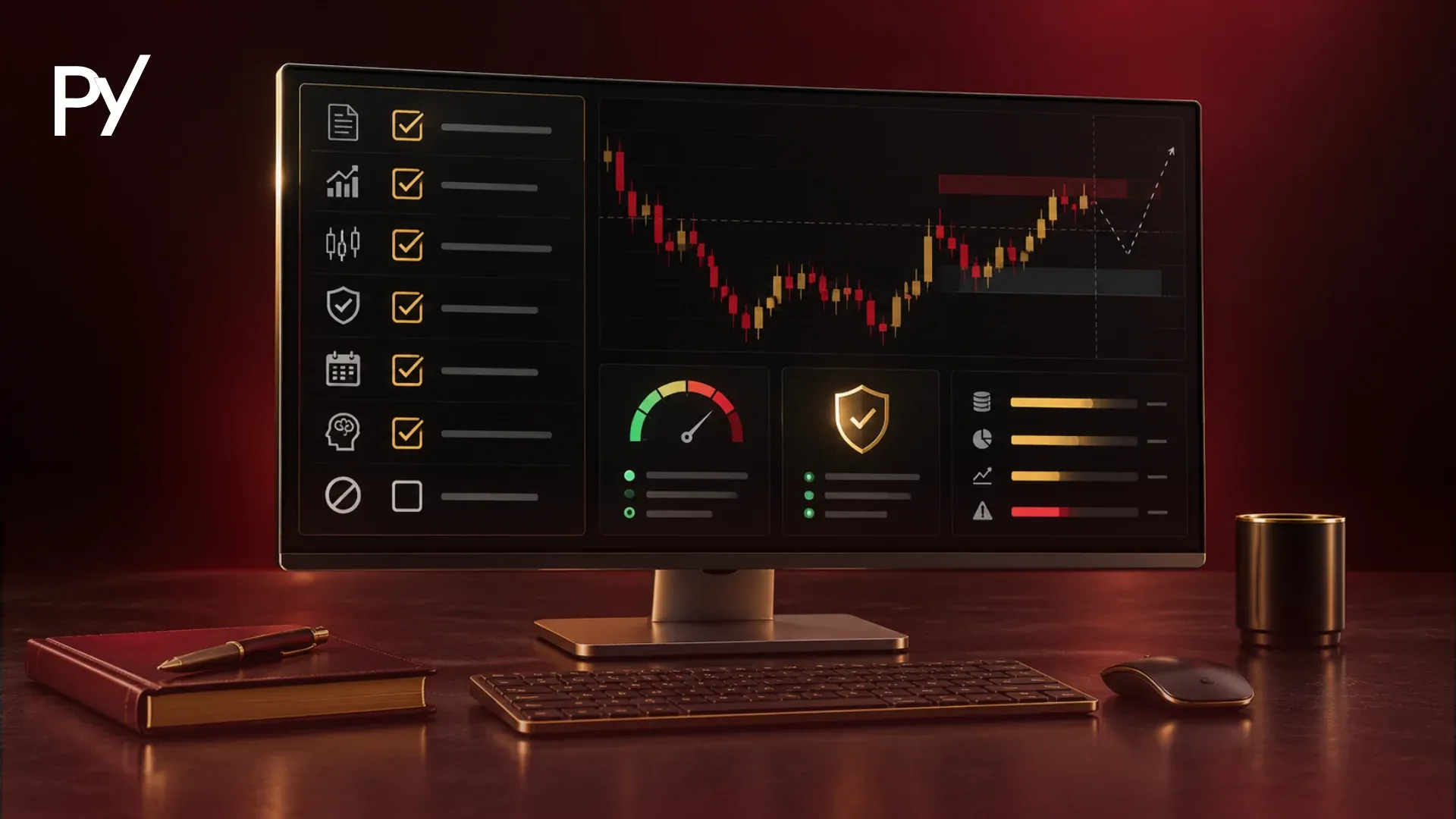
To bridge the gap between speculative gambling and systematic trading, you must implement the following structural controls:
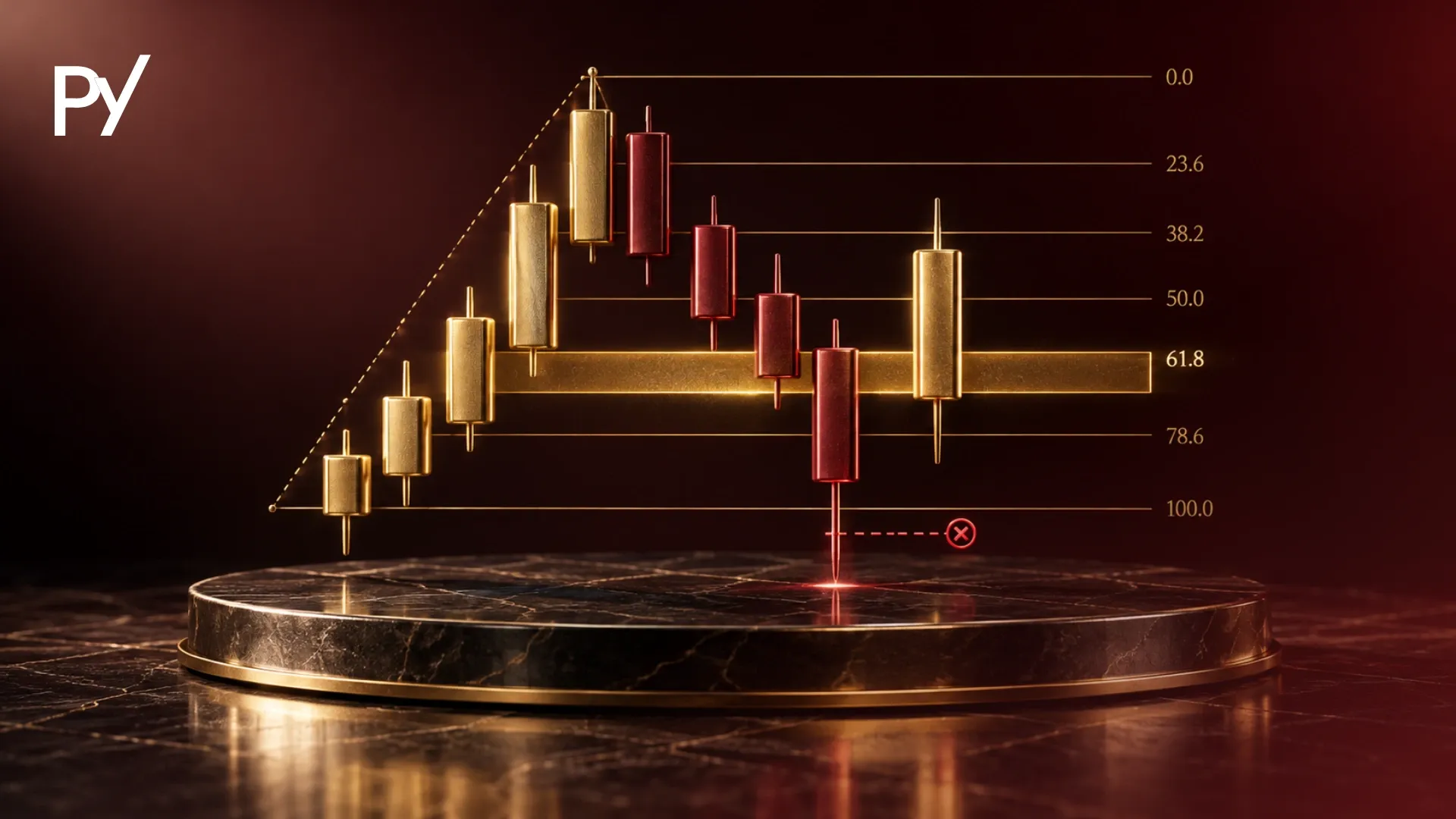
Step 1: Pre-define risk per trade (R). Never size a position based on how confident you feel about the setup. Professional traders risk a fixed percentage of their capital per trade—typically between 0.5% and 1%.
If your strategy dictates a 1% risk, a string of ten consecutive losses will only draw down your account by roughly 10%. A gambler risks 20% on a whim and is wiped out in less than a day.
Step 2: Implement hard stop-loss limits. Entering a trade without a stop-loss is identical to writing a blank check to the market. A stop-loss ensures that if your statistical edge fails on that specific execution, your capital damage is permanently capped at your predefined risk limit.
Step 3: Track execution statistics. Gamblers remember their big wins and suppress the memory of their heavy losses. Traders log everything.
You must track your win rate, your average winner, and your average loser across a sample size of at least 100 trades. If the mathematical EV is negative, you must stop trading live capital and adjust the system.
Step 4: Establish emotional circuit breakers. Even the best traders face psychological fatigue. Set a daily rule that removes you from the screens when conditions deteriorate.
If you take three consecutive losses, or if you hit a 3% total drawdown for the day, close the platform. Walking away protects your capital from the emotional spiral of revenge trading.
Conclusion
So, is day trading gambling? Only when math and discipline are missing, because the line separating day trading from gambling is defined entirely by those two factors. Without a positive expected value, a hard stop-loss, and systematic position sizing, actively trading the financial markets is functionally identical to playing a slot machine. The market will exploit every behavioral bias you carry, punishing overconfidence and loss-chasing with rapid capital destruction. However, when you enforce rigid risk parameters and treat capital preservation as your primary job, you remove luck from the equation and replace it with statistical probability.
Trading inside a funded account structure accelerates this discipline by forcing you to operate within hard daily limits. To start building a system that relies on statistical edge rather than blind chance, explore the core mechanics of day trading.
Disclaimer: This guide was written with AI assistance, reviewed for accuracy by the Proptary editorial team, and kept up to date. It's for education only — not financial advice. Prop trading and the financial markets carry a significant risk of loss, so consider your own situation and consult a licensed advisor before you trade.
FAQ
Is day trading gambling or investing?
Day trading is active financial speculation, positioning it between long-term investing and gambling. Unlike gambling, which operates on a fixed house edge and negative expected value, day trading allows participants to manage risk and build a positive statistical edge. However, unlike long-term investing, day trading focuses on capturing short-term intraday price movements rather than multi-year growth.
Why do ~90% of retail day traders lose money?
Most retail day traders lose money due to a lack of risk parameters, transaction costs, and emotional biases like revenge trading and loss chasing. While many traders possess technical knowledge, they fail to implement strict position sizing or hard stop-losses, effectively turning their trading strategies into high-risk financial bets.
Is day trading based on skill or luck?
Day trading relies on statistical edge and risk execution over a large sample size of trades, making it a skill-based discipline. While individual trade outcomes contain random variance, long-term profitability depends on managing probability, calculating expected value, and maintaining emotional control rather than relying on luck.
What causes day trading to turn into gambling?
Day trading turns into gambling when a trader abandons risk rules, removes stop-loss limits, or scales up position sizes to recover recent losses. Engaging in revenge trading, acting on emotional impulses, or treating technical chart patterns as guaranteed outcomes removes mathematical expectancy and reduces trading to chance.
How can traders avoid trading like a gambler?
Traders can avoid gambling by risking a fixed percentage of capital per trade (typically 0.5% to 1%), using hard stop-losses on every execution, and tracking performance metrics across at least 100 trades. Enforcing hard daily drawdown limits and stepping away when rules are breached ensures discipline stays ahead of emotion.
Disclaimer
Disclaimer: This guide was written with AI assistance, reviewed for accuracy by the Proptary editorial team, and kept up to date. It's for education only — not financial advice. Prop trading and the financial markets carry a significant risk of loss, so consider your own situation and consult a licensed advisor before you trade.
Proptary editorial team independently reviews prop trading firms, verifies payouts, and explains the rules that decide who keeps an account. We disclose affiliate relationships and publish methodology for every score.