Trading fundamental analysis evaluates macroeconomic indicators, central bank policies, and liquidity trends to set a directional bias. In funded trading, it works mainly as a risk shield against holding positions through spread expansion, high-impact news slippage, and trailing drawdown breaches. Prop traders use macro drivers to decide what and when not to trade, pairing fundamental bias with technical entry timing.
Trading fundamental analysis is the method of evaluating macroeconomic data, central bank interest rate decisions, and sovereign economic health to forecast broad capital flows and asset price trajectories. It identifies the macro forces driving institutional liquidity across financial markets.
You have probably had a technically perfect breakout pattern get erased in four seconds because a surprise inflation report dropped while you were in the trade. For a funded trader, fundamental analysis is not an academic exercise in long-term valuation: it is an operational shield against sudden volatility, negative slippage, and drawdown breaches that end the account. This guide covers how macro drivers dictate institutional flow and how to navigate economic data under strict prop firm rules.
What Is Trading Fundamental Analysis?
Trading fundamental analysis measures the underlying economic conditions of a currency, commodity, or index to establish its high-probability directional bias. Unlike fundamental analysis in corporate equities (which examines balance sheets, debt ratios, and discounted cash flow models) macro fundamental analysis trading evaluates capital mobility across borders. Capital naturally seeks three things: higher relative real yields, economic expansion, and political stability.
When you trade retail spot forex, commodities, or index futures inside an evaluation or funded account, you aren't holding assets for five years. You are participating in leveraged intraday and swing price action. Macro fundamentals determine the liquidity environment you operate within.
When a central bank shifts policy or an inflation print surprises institutional desks, billions of dollars reallocate instantly. If you rely solely on candlestick patterns without understanding the macro engine moving price, you are essentially trading blind against institutional order flow.
The Core Macro Catalysts: How Economic Data Moves Price
The primary macroeconomic drivers that trigger aggressive market repricing fall into four major categories: central bank monetary policy, inflation prints, employment statistics, and economic output data.
Central Bank Monetary Policy & Interest Rates: Central banks (such as the Federal Reserve, European Central Bank, and Bank of England) set benchmark interest rates to either stimulate or cool their respective economies. A currency backed by an aggressive, rate-hiking central bank attracts yield-seeking capital, driving relative exchange values higher. Conversely, rate cuts lower currency yields and compress borrowing costs, often boosting equity indices while softening the domestic currency.
Inflation Metrics (CPI & PPI): The Consumer Price Index (CPI) and Producer Price Index (PPI) track price pressures across consumer and wholesale baskets. Higher-than-expected inflation forces central banks to keep interest rates elevated for longer, sparking sharp repricing across bond markets, currencies, and index valuations.
Employment and Labor Reports (NFP & Jobless Claims): Data points like US Non-Farm Payrolls (NFP) and weekly initial jobless claims illustrate consumer economic resilience. A robust labor market gives central banks leeway to tighten monetary policy without immediately triggering a recession. A sudden spike in unemployment often signals economic contraction, forcing rapid defensive positioning from algorithmic liquidity providers.
Economic Output & Sentiment (GDP & PMI): Gross Domestic Product (GDP) and Purchasing Managers' Index (PMI) surveys measure broad economic health and sector-level sentiment. Readings above the 50 mark in PMI signify expansion, while prints below 50 reflect contraction, setting multi-week trends for commodity demand and equity benchmarks.
The critical factor during high-impact releases is the consensus deviation. The market prices in analyst expectations days in advance. A print that matches forecasts rarely causes massive dislocation; extreme volatility occurs when the actual number diverges sharply from the consensus forecast.
Why Fundamental Analysis Matters Inside a Funded Account
Fundamental analysis serves as a capital preservation mechanism in funded trading, helping you defend your daily loss limit and maximum trailing drawdown. In a personal cash account, a surprise macroeconomic move might simply give you a temporary paper loss that you can afford to hold through. In a prop firm challenge, an adverse 50-pip whipsaw during a news spike can breach your daily loss floor in two seconds, permanently revoking your account credentials.
Using fundamental analysis inside a funded account delivers three essential risk protections:
Institutional Directional Alignment: By identifying which currency or asset holds the strongest macroeconomic support, you avoid taking technical counter-trend trades against institutional order flow.
Volatility Regime Identification: Economic calendars tell you exactly when the market will transition from orderly technical price structures into erratic, news-driven spreads. Knowing when not to trade is just as profitable as knowing when to execute.
Hard Drawdown Protection: Unexpected macro shocks routinely blast through technical support and resistance levels without pausing. Respecting macro releases ensures you aren't holding leveraged exposure when liquidity evaporates.
Developing this macro awareness is an indispensable layer of the overall trading skills for funded traders required to survive beyond your first payout.
Fundamental vs. Technical Analysis: The Prop Trader's Hybrid Edge
Fundamental analysis tells you what asset to trade and which direction has the path of least resistance; technical analysis determines where to enter and how to manage your risk parameters. Relying exclusively on one discipline while ignoring the other leaves an operational blind spot.
Parameter
Fundamental Analysis
Technical Analysis
Hybrid Funded Strategy
Core Focus
Macro data, interest rates, central bank policy
Price action, market structure, liquidity pools
Macro dictates bias; price action dictates entry
Time Horizon
Multi-day, multi-week macro cycles
Intraday to multi-day execution levels
Intraday execution aligned with macro weekly trends
Account Role
Directional filter & calendar risk shield
Precise entry trigger & stop-loss placement
Keeps you on the right side of institutional flow
Prop Trap
Holding losing trades because "macro is right"
Getting stopped out by sudden economic data spikes
Exits immediately if technical risk levels fail
A structured top-down workflow bridges the two disciplines:
Weekly Macro Review: Check the economic calendar every Sunday. Identify upcoming central bank rate decisions, CPI prints, and employment data across your watchlists. Determine which assets have strong macro tailwinds.
Daily Risk Mapping: Mark out "red-folder" release times for the day. Note the exact times when trading restrictions apply or spreads are likely to widen.
Technical Execution: Once the macro bias is clear and high-impact release windows have cleared, use your chart patterns and support/demand zones to execute trades in the direction of the broader fundamental trend.
Prop Firm News Rules and Execution Realities
Prop firms implement strict news trading rules because major fundamental releases expose their risk desks to liquidity voids and counterparty slippage. During high-impact releases, Tier-1 liquidity providers pull their resting limit orders, causing the bid-ask spread to blow out from 0.2 pips to 8 or 10 pips in an instant.
Most firm rulebooks apply specific restrictions you must account for:
The News Blackout Window: Many firms prohibit opening or closing positions within 2 to 5 minutes before and after high-impact ("red-folder") calendar events. Any profits generated during this window may be confiscated, or the account flagged for a rule breach.
Straddle and Bracket Bans: Placing simultaneous buy-stop and sell-stop orders directly ahead of a news release to catch the breakout is widely banned across evaluation firms.
Overnight and Weekend Holding Bans: Swing-trading macro themes requires confirming whether your funded account tier allows holding trades through Friday market close, where unexpected weekend geopolitical headlines can gap price past your stop-loss.
If you plan to trade around economic events, you need an execution framework built specifically to manage slippage and spread widening, which you can study in our dedicated guide to news trading strategy.
Common Fundamental Traps That Blow Funded Accounts
Traders often misunderstand how to apply fundamental analysis within the rigid risk boundaries of a prop firm account. Here are the three most common traps:
The "Right Bias, Blown Account" Fallacy: You accurately predict that an inflation print will come in hot and drive the US Dollar higher. However, the immediate reaction of a high-impact release is frequently a two-way liquidity sweep. The initial whip stops you out (or trips your trailing drawdown) seconds before the market aggressively rallies in your predicted direction.
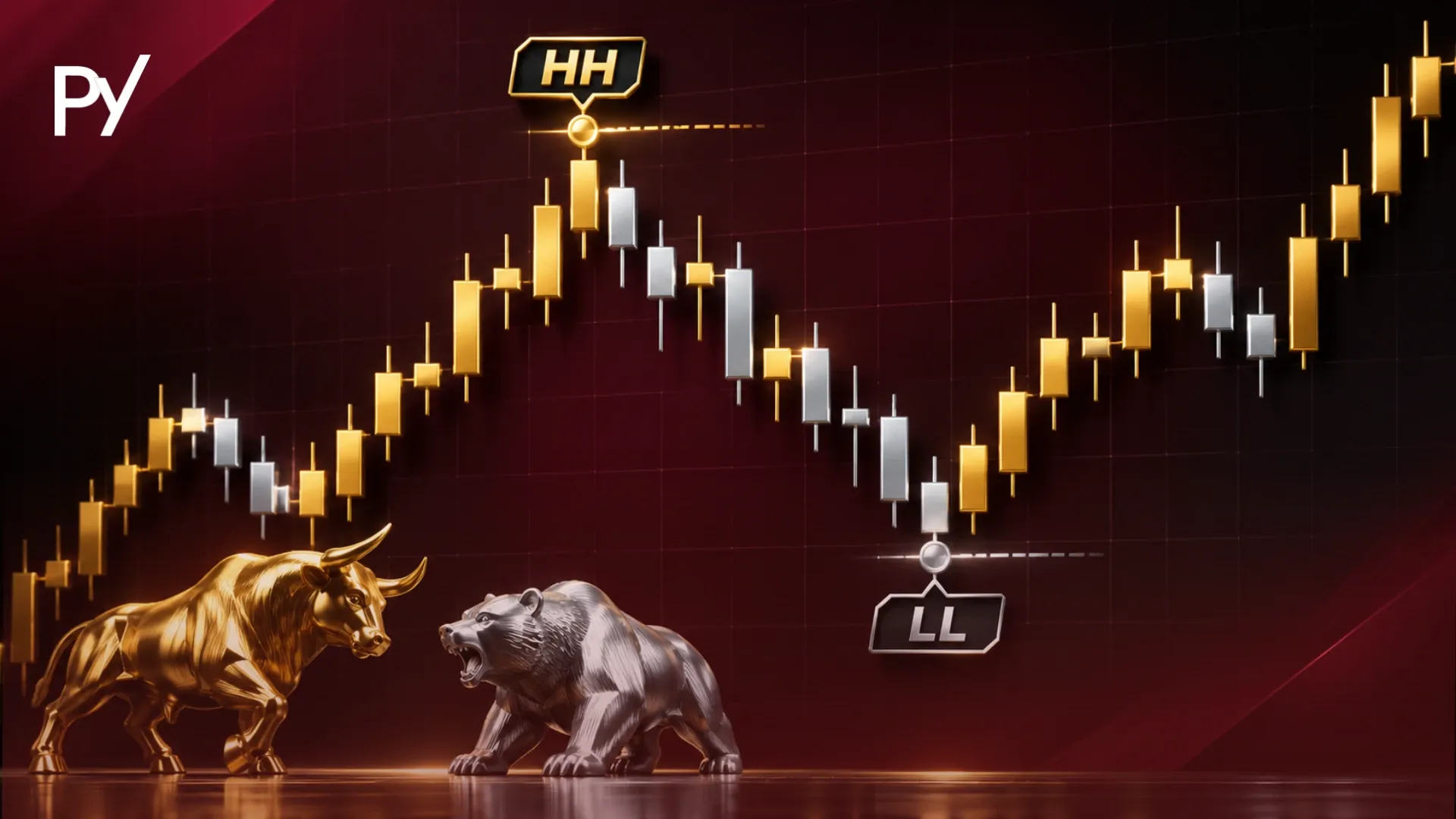
Fighting Price Action with Economic Theory: You take a short position on an index because economic growth figures looked weak, but the index continues to make higher highs. Refusing to cut your loss because "the market is irrational and economics says it must fall" will blow your evaluation. Remember that your trailing drawdown floor locks dynamically against peak balance or equity. The market can remain disconnected from economic prints far longer than your drawdown limit can survive.
Treating Economic Prints Like Lottery Tickets: Sizing up heavily right before a major news print to pass a challenge in a single day is pure gambling. When slippage occurs, market orders do not fill at your stop-loss price; they fill at the next available tick, routinely pushing accounts into negative balance breaches that fail the challenge instantly.
Conclusion
Trading fundamental analysis is not about forecasting economic trends years into the future; it is about respecting market catalysts and navigating institutional capital flows. By treating macroeconomic data as a directional filter and an operational danger zone, you prevent spread spikes and unexpected volatility from wrecking your hard-earned evaluation. Pair clear macro context with disciplined technical timing to ensure your risk stays protected under all market conditions. Mastering macro catalysts is just one part of protecting your funded capital: deepen your edge by exploring our complete playbook on trading skills for funded traders.
Disclaimer: This guide was written with AI assistance, reviewed for accuracy by the Proptary editorial team, and kept up to date. It's for education only — not financial advice. Prop trading and the financial markets carry a significant risk of loss, so consider your own situation and consult a licensed advisor before you trade.
FAQ
Can you day trade using fundamental analysis?
Yes, day traders use fundamental analysis primarily to establish an intraday directional bias and identify high-volatility danger windows. Rather than predicting long-term economic cycles, intraday traders watch economic calendar releases like CPI and interest rate decisions to determine which assets will experience elevated liquidity and momentum, aligning their short-term technical entries with institutional macro flow.
How do economic news releases impact fundamental analysis?
High-impact economic news releases act as immediate repricing catalysts. When actual economic prints diverge significantly from analyst consensus forecasts, algorithmic order flow rapidly adjusts prices across correlated assets. For fundamental traders, these releases validate or invalidate existing macro theses, producing sudden spikes in liquidity and volatility that either accelerate a multi-day trend or trigger immediate market reversals.
Is fundamental analysis more effective for forex or stock trading?
Fundamental analysis is critical in both markets, but the mechanics differ substantially. In forex, fundamentals center on sovereign health, relative interest rate differentials, and global liquidity cycles between currency pairs. In stock trading, fundamental analysis leans heavily toward microeconomic drivers such as company earnings, revenue growth, and debt structure, although broader macroeconomic monetary policy heavily influences equity index valuations.
Can trading during fundamental news events cause you to fail a prop firm challenge?
Yes. Beyond directional loss, fundamental news releases cause liquidity voids and spread blowouts. If you hold open positions or attempt to execute during a release, negative slippage can push your fills far beyond your planned stop-loss price. In a prop account with rigid daily loss or trailing drawdown limits, this sudden execution gap frequently breaches account rules instantly.
What economic calendar tools should funded traders track?
Funded traders should monitor dedicated economic calendars such as Forex Factory, Investing.com, or TradingView. Look specifically for high-impact events, noting the consensus forecasts, previous prints, and exact release times. Incorporating these schedules into your daily routine ensures you know when trading restrictions apply and when market conditions are prone to extreme spread expansion.
Disclaimer
This guide was written with AI assistance, reviewed for accuracy by the Proptary editorial team, and kept up to date. It’s for education only, not financial advice. Prop trading and the derivatives markets carry a significant risk of loss, and past performance is not a guarantee of future results. Consider your own situation and consult a licensed advisor before you trade.
Proptary editorial team independently reviews prop trading firms, verifies payouts, and explains the rules that decide who keeps an account. We disclose affiliate relationships and publish methodology for every score.